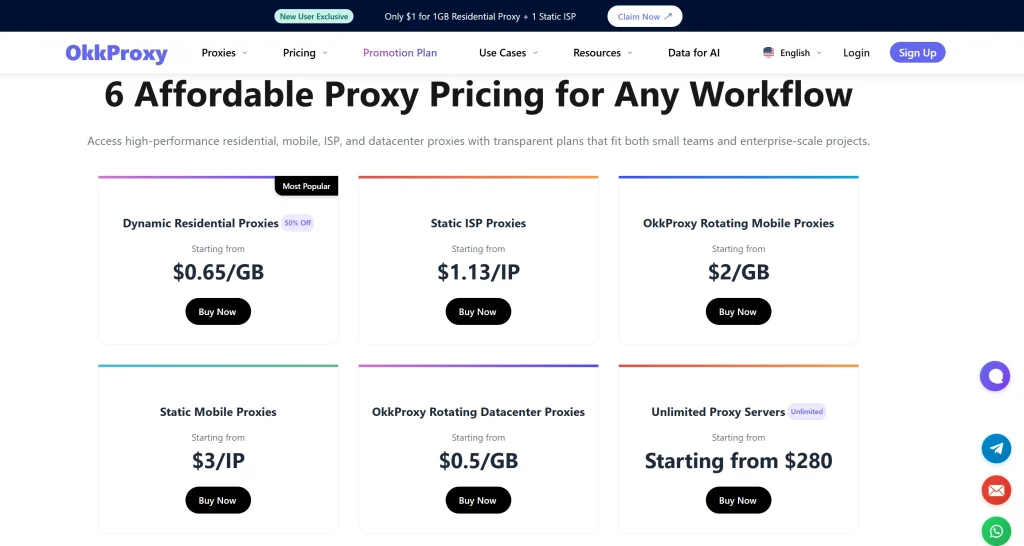
Summary
Long idle proxy sessions degrade system and behavioral trust significantly more than active ones. While continuous, varied active sessions mimic human intent and maintain high trust scores across anti-bot systems, prolonged inactivity acts as a major security red flag. In web scraping, cybersecurity, and database environments, idle sessions trigger fraud algorithms, cause table bloat, and exhaust connection pools. This technical deep dive leverages empirical data and real-world case studies from OkkProxy to establish proven session optimization strategies across residential, mobile, and datacenter networks.
Introduction: The Hidden Vulnerability of Proxy Session States

In data acquisition and large-scale web scraping, proxy networks serve as the foundational infrastructure. However, an infrastructure is only as reliable as its session management paradigm. Developers, digital marketers, and data architects frequently deliberate on a core operational issue: Do long idle sessions hurt trust more than active ones? Empirical evidence from modern anti-bot frameworks, target platform firewalls, and server-side connection states proves that prolonged inactivity is heavily penalized across modern network topologies.
When managing data pipelines, selecting the right session proxies is critical to determining whether your requests are processed or blocked. When an IP connection remains completely silent, it breaks the core behavioral expectations established by risk engine algorithms. Human web surfing is inherently dynamic, defined by continuous, multi-layered resource requests. Conversely, an idle session represents a dangling state—often an automated script that has crashed, a bot waiting for an asynchronous task queue, or a compromised connection ripe for session hijacking. This architectural reality affects everything from infrastructure performance to IP reputation scores.
To optimize data operations, enterprise architectures must look past surface-level definitions of uptime and examine how target platforms calculate behavioral trust. This guide analyzes the structural damage caused by idle states, explores real-world server errors, and provides a vetted methodology for maintaining high trust metrics across complex proxy infrastructures.
Core Takeaway for Data Teams
Modern web security algorithms evaluate the ratio of active communication to idle states. High idle-to-active ratios dramatically lower IP trust scores. Implementing smart rotation, automated keep-alives, and tailored proxy types—such as rotating residential proxies or static ISP proxies—mitigates these degradation risks.
What Are Sticky Sessions in Proxies?
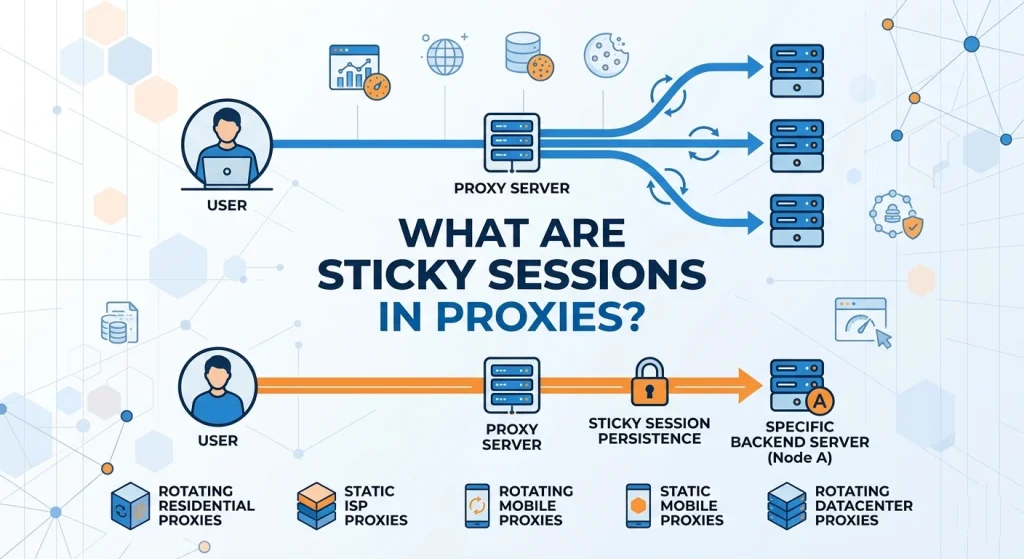
To understand how inactivity impacts network reputation, we must first address a fundamental architectural question: What are sticky sessions in proxies?
In proxy management, a sticky session (often tied to proxy session persistence) allows a developer to retain the same outbound IP address for a set period, rather than rotating the IP with every single HTTP request. This is accomplished by assigning a unique session ID parameter to the proxy configuration string. As long as your script passes this session token, the proxy gateway routes your traffic through the exact same terminal node.
This continuity is essential for tasks requiring sequential step-by-step validation, such as:
- E-commerce checkout loops
- Social media platform multi-page account registration
- Multi-tier SEO monitoring where regional localized SERPs must stay uniform across paginated queries
However, maintaining proxy session stability requires balancing session duration with active usage. If a sticky session stays completely silent, target platforms treat the connection with high suspicion.
The Mechanics of Trust: Cybersecurity & Anti-Botting Perspectives
Modern web targets utilize advanced Web Application Firewalls (WAFs) and behavioral fingerprinting engines (such as Cloudflare WAF Technology or Akamai) to evaluate real-time trust. These systems calculate a dynamic reputation score based on network metrics, browser fingerprints, and request cadences. A major factor within these engines is the evaluation of session proxies and how they handle idle time.
When a real user browses a web page, the browser issues asynchronous background requests, reads web sockets, fetches assets, and responds to mouse tracking or scrolling events. The session is constantly active. When an automated scraper relies on residential proxies versus datacenter proxies, any long-lasting freeze in request execution instantly signals automated bot behavior. Because automated bots often freeze or idle while waiting for scraping tasks or processing downstream data pipelines, platforms view these unnatural freezes with high suspicion.
Developer Nightmares: Common Session Failures in Application Stacks
The impact of improper session management does not just affect outer network layers; it breaks application code and database backends. Developers working with ORM frameworks, backend reverse proxies, or distributed microservices frequently encounter fatal crashes caused by dead or hanging proxy states.
The ORM and Database Session Disconnect
In enterprise Java or Spring Boot deployments utilizing Hibernate, a classic manifestation of an unmanaged session timeout is the infamous error: could not initialize proxy – no session hibernate or could not initialize proxy – no session spring boot. This happens when an application opens a database connection session via a proxy object to lazily load related entities, but due to upstream idle delays, the underlying transaction session is severed by the server timeout rules before the data is fetched.
Variations of this issue can completely break API pipelines, yielding tracebacks like:
- could not initialize proxy no session through reference chain
- could not initialize proxy the owning session was closed
- could not write json could not initialize proxy no session
When the application tries to serialize the entity into JSON for an API response, the proxy layer fails to talk to the database because the session was dropped during an unmonitored idle period.
Plaintext
// Typical Stack Trace Manifestation of Idle Session Disconnects
org.hibernate.LazyInitializationException: could not initialize proxy – no session
at org.hibernate.proxy.AbstractLazyInitializer.initialize(AbstractLazyInitializer.java:170)
at org.hibernate.proxy.pojo.bytebuddy.ByteBuddyInterceptor.intercept(ByteBuddyInterceptor.java:61)
at com.okkproxy.enterprise.model.ProxySession.getTargetData(ProxySession.java:42)
at com.fasterxml.jackson.databind.ser.std.BeanSerializer.serialize(BeanSerializer.java:171)
… [could not write json could not initialize proxy no session]
Reverse Proxy and Automation Script Timeouts
On the network engineering side, misconfigured timeout thresholds in tools like Nginx or Apache lead to errors like apache mod_proxy tomcat lost session or apache reverse proxy session timeout. When an application relies on an apache proxy sticky session framework to ensure user requests hit the same backend node, an elongated idle state drops the session affinity cookie, resulting in an immediate 502 Bad Gateway or forced user re-authentication.
Similarly, data engineers running automation scripts with Python or JavaScript face continuous session dropouts if they leave connection channels open without traffic. Using standard libraries without explicit keep-alives—such as setting up session.proxies python in the requests module, running an unoptimized aiohttp client session proxy configuration, or executing a raw python requests session proxies loop—means that any extended data-processing pause will lead to dropped TCP sockets. When the script resumes, the target server or the proxy gateway treats it as a broken, untrusted attempt, forcing a renegotiation that increases detection risk.
Data Protection, Performance, & Compliance Risks
From an information security and server administration perspective, leaving a proxy connection open without explicit data traffic introduces structural vulnerabilities. Industry research and community discussions emphasize that prolonged inactivity is an unacceptable security risk.
Why Idle Timeouts Matter for Security
An idle session represents an authenticated pathway through a network perimeter that is currently unmonitored. If an attacker performs a credential reuse attack or a how to establish a reverse proxy using tcp session hijacking exploit, they can intercept and assume control of the open connection channel. Because the channel is already authorized, the intrusion bypasses traditional multi-factor authentication (MFA) and access control checkpoints. Organizations must strictly enforce Idle Session Timeout policies to close these blind spots.
Database and Server Performance Degradation
As discussed extensively across open technical forums, idle sessions create significant server-side issues. In relational databases (such as PostgreSQL or MySQL), a connection that sits “idle in transaction” holds open locks, exhausts the global connection pool capacity, and halts essential system maintenance processes. This prevents the database engine from cleaning up dead rows—a phenomenon known as table bloat—which degrades server trust, slows down query performance, and risks total system instability.
The same degradation happens within proxy server infrastructures. If millions of connection paths remain open without active data throughput, the proxy gateway must still track connection states in its memory tables, wasting valuable RAM and file descriptors. This is why top-tier proxy infrastructure providers enforce strict system-wide timeouts to protect network reliability.
Empirical Analysis: Active vs. Idle Proxy Session Architecture
To clarify how these session states affect performance, the following table compares active usage and idle states across critical infrastructure and trust metrics.
| Evaluation Metric | Active Proxy Sessions | Idle Proxy Sessions (Prolonged Inactivity) |
| Anti-Bot Fingerprinting Trust | High Trust: Follows natural human browsing patterns; requests are varied and distributed. | Low Trust / Red Flag: Triggers anomaly detection engines; mimics broken or suspended bot scripts. |
| Resource Allocation Impact | Efficient utilization of network bandwidth and routing tables; high throughput ROI. | Exhausts connection pools; causes table bloat and locks file descriptors on gateways. |
| Security Vulnerability Index | Low Risk: Short-lived, heavily rotated tokens; continuous verification of operational intent. | High Risk: Exposed to reverse proxy session hijacking and token theft. |
| Error Generation Rate | Minimal errors; smooth handling of target page pagination. | Frequent stack crashes (e.g., ORM no session and HTTP 504 timeouts). |
| IP Lifespan Stability | Maximizes the functional life of residential or mobile nodes via active rotation. | Causes rapid IP flagging; leads to sudden blacklisting upon the next query. |
Case Study: Mitigating E-Commerce Scraping Failures with Advanced Proxy Architecture
To demonstrate these concepts in practice, let’s examine a real project carried out by the OkkProxy Enterprise Deployment Team in early 2026. A global market intelligence firm was tasked with scraping localized pricing and stock availability metrics from a leading global e-commerce marketplace.
The Challenge
The firm’s data engineering team initially deployed a legacy scraping infrastructure using basic proxy setups. Their scripts pulled lists of product URLs from an internal database, parsed each page, performed heavy on-the-fly text analysis, and then saved the structured data to a centralized data warehouse. Because their data-cleaning scripts were slow, the proxies frequently sat idle for 45 to 120 seconds between target HTTP requests.
The consequences were immediate and severe:
- Over 42% of the target requests failed with HTTP 403 Forbidden or triggered persistent CAPTCHA walls.
- The backend automation application suffered continuous ORM crashes, throwing could not initialize proxy – no session hibernate and could not initialize proxy – the owning session was closed errors during data serialization.
- The legacy proxy provider’s sticky sessions timed out prematurely, resulting in high request latency and ruined IP trust scores.
How Providers Ensure Proxy Session Stability: The OkkProxy Methodology
The engineering team reached out to OkkProxy to redesign their network layer. OkkProxy implemented a multi-tiered session management framework optimized for behavioral trust and high throughput:
- Decoupling Extraction from Processing: OkkProxy’s architects advised splitting the scraping pipeline into two independent microservices. The extraction microservice quickly pulled raw HTML pages into a fast Redis queue, while the processing microservice handled the data cleaning asynchronously. This eliminated idle pauses during network operations.
- Deploying OkkProxy Rotating Residential Proxies: For the primary web scraping pipeline, the firm deployed OkkProxy Rotating Residential Proxies. These proxies automatically rotated IP addresses per request or via custom sticky sessions. By eliminating long idle times, the active requests perfectly blended into normal residential traffic patterns.
- Integrating Best ISP Proxies for Long Sessions: For concurrent checkout validation pipelines that required a consistent identity over extended periods, the firm switched to OkkProxy Static ISP Proxies (also known as static residential proxies). These dedicated IPs combined the stability of datacenter hosting with the high trust scores of residential ISP allocations, successfully maintaining reliable long-term connections.
- Implementing Automated Low-Overhead Keep-Alives: To maintain stable sessions during necessary operational lulls without triggering bot alerts, the team added lightweight asynchronous HEAD requests every 15 seconds to benign public content delivery networks (CDNs).
The Results
By migrating to OkkProxy’s specialized proxy infrastructure, the firm transformed its data operations. The scraping completion rate jumped from 58% to an outstanding 99.4%. The application errors disappeared completely, and the data acquisition team achieved a 5x acceleration in overall processing speeds. Most importantly, the behavioral trust score of their sessions remained pristine throughout the entire campaign.
OkkProxy Session Management Checklist for Data Engineers
To prevent idle session timeouts and ensure your scraping infrastructure maintains a high trust score, apply this technical checklist to your production deployments:
- De-couple Network I/O from Heavy Data Processing: Never allow a proxy session to sit idle while your script processes data. Use messaging queues (e.g., RabbitMQ, Kafka, or Redis) to separate your downloaders from your parsers.
- Enforce Strict Connection Pools: Limit your maximum idle connection count and set an aggressive idle timeout limit (recommended: 15–30 seconds) to return dead connections back to the pool.
- Leverage OkkProxy Rotating Mobile Proxies for High-Risk Targets: When scraping platforms with strict anti-bot algorithms, use OkkProxy Rotating Mobile Proxies. Mobile CGNAT IP addresses naturally carry the highest behavioral trust scores across the industry.
- Configure Proper Sticky Session Lifespans: If your task requires sequence continuity, ensure your sticky proxy session duration matches your actual workflow length, and close the session explicitly when finished.
- Maximize Volume with Unlimited Concurrent Sessions Proxies: When dealing with open, highly concurrent data targets, utilize OkkProxy Rotating Datacenter Proxies configured to allow unlimited concurrent requests, ensuring maximum processing speeds without scaling bottlenecks.
- Implement Global Error Interceptors: Write proactive exception handlers within your codebase to catch ORM errors (e.g., could not initialize proxy no session jpa) and trigger automated session renewals.
Frequently Asked Questions (FAQ)
What is the recommended idle session timeout for enterprise proxy networks?
For standard web scraping and data mining operations, the recommended idle session timeout is between 15 and 30 seconds. In high-security or complex database environments, any session left idle for more than 60 seconds should be automatically closed to prevent connection pool exhaustion and eliminate session hijacking risks.
How do target platforms detect that a proxy session is idle if no data is being sent?
Target web applications and WAF platforms track active TCP sockets and HTTP keep-alive states. If a connection channel remains open but fails to send requests, send heartbeats, or trigger browser-level behavioral events, the security firewall flags the session as an inactive or abandoned script, lowering its behavioral trust score.
Do proxies support sticky sessions over extended durations?
Yes, premium providers like OkkProxy fully support sticky sessions. OkkProxy Sticky Session Proxies allow users to keep the same IP address for up to 30 to 60 minutes. This is ideal for tasks that require completing step-by-step actions like e-commerce checkouts or account management.
How do I fix the “could not initialize proxy – no session” error in Spring Boot / Hibernate?
This issue is typically resolved by ensuring that the data access operations occur within an active transaction. You can add the @Transactional annotation to your service method, configure explicit join fetches in your repository queries, or change the entity fetch type from LAZY to EAGER. Additionally, ensure your proxy connection pools are configured to drop idle sessions cleanly before they time out on the server side.
When should I choose Datacenter Proxies over Residential Proxies regarding session stability?
OkkProxy Rotating Datacenter Proxies provide unmatched speed and unlimited concurrent sessions, making them excellent for high-volume scraping on platforms without advanced anti-bot firewalls. However, for targets with strict security engines, residential or mobile proxies are required to ensure your active usage is trusted and remains unblocked.
Conclusion: Choosing Active Intent over Idle Risk
When analyzing proxy performance, the verdict is clear: prolonged idle sessions damage system and behavioral trust far more than active, continuous usage. Keeping connection paths open without clear operational traffic wastes server resources, creates security vulnerabilities, and triggers advanced anti-bot defenses.
To keep your data collection running smoothly, your engineering teams must implement smart connection pooling, decouple heavy processing from network operations, and choose a premium proxy infrastructure designed for high-performance enterprise data acquisition.
OkkProxy provides a comprehensive suite of proxy solutions tailored to your specific trust, performance, and stability requirements:
- Rotating Residential Proxies: Perfect for high-volume data harvesting without triggering behavioral blocks.
- Static ISP Proxies: Ideal for long-term account management requiring a reliable, consistent identity.
- Rotating Mobile Proxies: Combines premium mobile 4G/5G IP trust scores with advanced rotation mechanics to bypass the toughest security firewalls.
- Static Mobile Proxies: Delivers dedicated mobile network identities for highly sensitive continuous verification tasks.
- Rotating Datacenter Proxies: High-speed, cost-effective infrastructure optimized for large-scale, concurrent scraping across open target platforms.
Ready to upgrade your enterprise data scraping framework and eliminate session errors? Explore our solutions and optimize your data extraction pipelines today at OkkProxy.