Summary
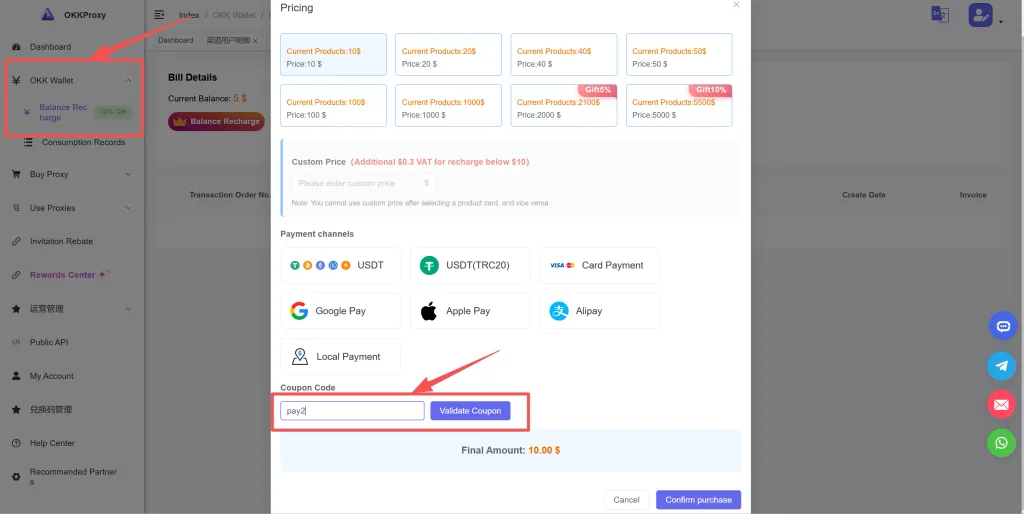
What Is a Sticky Proxy Session? A sticky proxy session anchors your traffic to a single IP address for a predefined duration or task, bridging the gap between absolute anonymity and session stability. By balancing consistent session identity with IP rotation, sticky sessions are vital for multi-step workflows like e-commerce checkouts, social media automation, and web scraping. Leveraging enterprise-grade infrastructure from platforms like OkkProxy ensures seamless authentication, lower CAPTCHA friction, and maximum reliability across diverse digital operations. Use code PAY2 for 10% OFF all recharges!
What Is a Sticky Proxy Session? (Core Definition & Concepts)
In the world of web scraping, automated testing, digital marketing, and multi-account management, choosing the right proxy infrastructure can make or break your operations. While completely random IP rotation protects your anonymity, it often destroys user session states on target websites. Conversely, static IPs provide rock-solid stability but expose you to rapid tracking and IP bans.
Enter the sticky proxy session (also known as a session persistence proxy). This hybrid mechanism gives you the best of both worlds: dynamic IP rotation paired with temporary session stability.
Whether you are configuring an application load balancer sticky session, optimizing data pipelines for Retrieval-Augmented Generation (RAG), managing e-commerce stores, or researching how to configure sticky sessions in enterprise load balancers like F5 and Nginx, understanding this technology is essential.
Key Terminologies Breakdown
- Sticky Proxy Meaning: The retention of a single proxy node assignment over multiple sequential requests.
- Sticky Session Load Balancer: In network architecture, a mechanism (such as an AWS ALB sticky session or Kubernetes Nginx ingress sticky session) that routes requests from a specific client to the same backend server container.
- Rotating vs. Sticky Proxy: Rotating proxies change the IP address on every request (ideal for large-scale anonymous data mining), whereas sticky proxies hold an IP address for a fixed window (ideal for workflows requiring a persistent digital footprint).
- Static vs. Sticky: Static proxies keep the same permanent IP indefinitely, while sticky proxies rotate periodically after your session window expires.
How Sticky Proxy Sessions Work Under the Hood
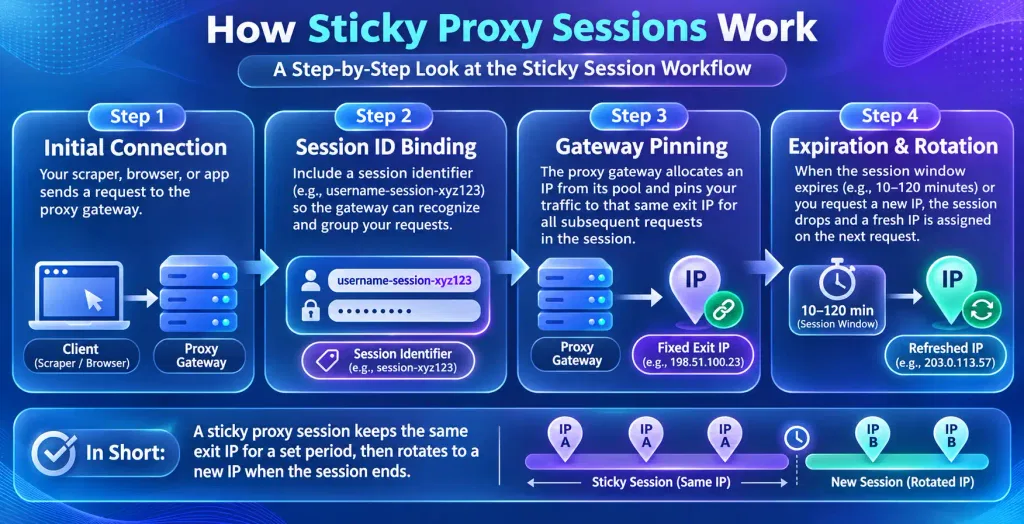
To understand how sticky sessions operate, it helps to examine both network-level load balancing and proxy gateway routing.
Technical Architecture
- Initial Connection Request: When your scraper, browser automation tool, or API client initiates a request, it connects to a proxy gateway port.
- Session ID & Parameter Binding: You typically trigger sticky behavior by appending custom parameters, sticky proxy ports, or a unique session identifier to your authentication credentials (e.g., username-session-xyz123:password).
- Gateway Pinning: The proxy server’s internal router checks the session identifier. If it is a new session, it allocates a fresh IP address from its pool (such as a residential pool or a mobile cellular network pool). For subsequent requests carrying that same identifier, the gateway bypasses the random rotation algorithm and pins your traffic to that exact exit node.
- Expiration & Rotation: Once the predefined time window expires (e.g., 10 minutes, 30 minutes, or 2 hours) or when you explicitly request a new IP, the session drops, and the next request triggers a fresh IP assignment.
Expert Engineering Insight: At OkkProxy, our proxy gateways maintain high-speed internal session caches. When dealing with complex multi-threaded scrapers, managing your session parameters efficiently prevents gateway timeout bottlenecks and ensures smooth IP recycling without triggering rate limits.
Why Sticky Proxy Sessions Matter: Key Benefits & Real-World Use Cases
Modern anti-bot systems (such as Cloudflare, Akamai, and PerimeterX) monitor behavioral patterns, TLS fingerprints, and IP velocity. Instantaneous, per-request IP changes often scream “bot activity” if performed on sensitive pages. Sticky sessions solve this problem.
Key Use Cases
- Multi-Step Workflows & Logins: Websites tie your authentication tokens, cookies, and shopping carts to your IP address. Changing your IP mid-checkout or mid-login instantly breaks your session, logging you out or raising security alarms.
- E-Commerce & Account Management: Managing multiple seller accounts on platforms like Amazon, eBay, or Shopify requires consistent IP footprints. Using dedicated infrastructure prevents sudden account suspensions triggered by erratic geolocation jumps.
- Sticky Proxy for Social Media: Managing automated scheduling or audience research across Instagram, TikTok, or X requires stable residential identities to avoid automated shadowbans.
- Sticky Proxy for RAG & AI Data Pipelines: When feeding real-time web data into Large Language Models via Retrieval-Augmented Generation (RAG), maintaining a stable session prevents pagination errors and blocked scrapers during deep multi-page extractions.
- Survey & Market Research: Platforms tracking user participation flag rapid IP shifts during multi-page form submissions. Sticky sessions simulate genuine human pacing.
Comparing Proxy Types: Finding the Right Fit for Your Workflow
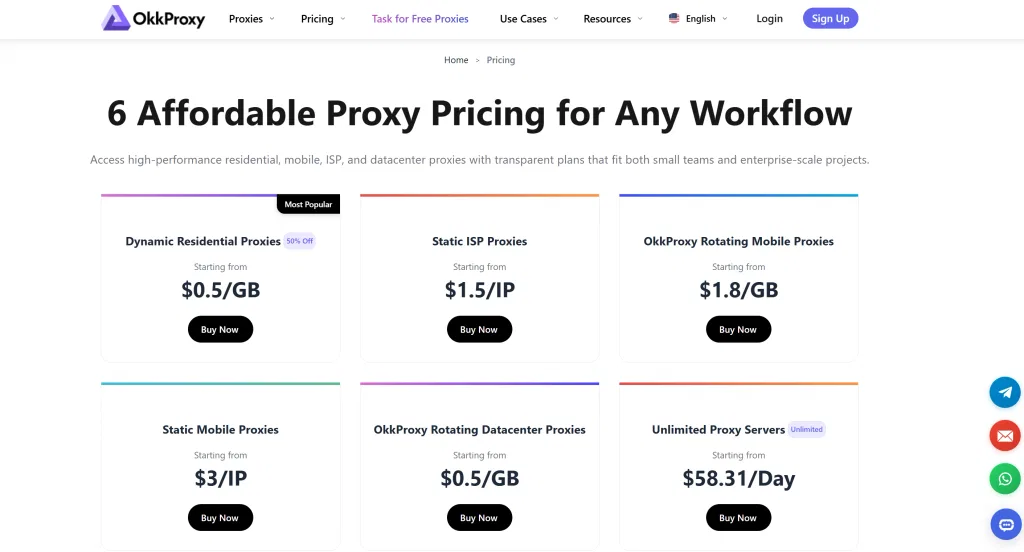
Different tasks demand different proxy architectures. The following table compares how sticky sessions integrate across various proxy types offered by industry-leading providers like OkkProxy:
| Proxy Category | Core Characteristics | Best Suited For | Sticky Session Support | Pricing Highlights |
|---|---|---|---|---|
| Rotating Residential Proxies | Millions of peer-to-peer residential IPs with automated rotation. | Large-scale web scraping, price monitoring, ad verification. | Fully Supported (Hold IP for 1–120 mins via session tags). | From $0.50/GB (Promax / Pro / Mini plans available). |
| Static ISP Proxies | Data center speeds paired with genuine ISP-assigned ASN ownership. | Long-term account management, sensitive logins, banking. | Permanent (Acts as an unchanging dedicated sticky session). | From $1.50/IP (7-day / 30-day broadcast or premium native options). |
| Rotating Mobile Proxies | Real 4G/5G cellular carrier IPs rotating via data usage or time. | Social media automation, mobile app testing, ad validation. | Supported (Pins connection to a specific cellular gateway port). | From $1.80/GB to $3.20/GB. |
| Static Mobile Proxies | Dedicated mobile device connections maintaining constant cellular routing. | High-trust mobile app operations and stealth browsing. | Permanent (Constant mobile carrier session persistence). | Available with custom country/city targeting. |
| Rotating Datacenter Proxies | High-speed, cost-effective server IPs with massive bandwidth. | High-speed API queries, bulk account creation, fast data seeding. | Supported (Configurable via custom proxy port mappings). | High-speed concurrent performance. |
Enterprise Infrastructure & Load Balancer Sticky Sessions
In DevOps and cloud architecture, the term “sticky session” also refers to server affinity in load balancing. Understanding how proxy sticky sessions interact with server load balancers is crucial for enterprise deployments.
Popular Load Balancer Configurations
- AWS ALB & ELB Sticky Sessions: Utilizing cookie-based session affinity (AWSALB or AWSALBAPP) to route returning users to the exact same EC2 instance or ECS container.
- Nginx & Nginx Plus: Configuring upstream modules with hash keys or cookie persistence (e.g., sticky cookie srv_id expires=1h domain=.example.com path=/;) to maintain user state.
- F5 BIG-IP LTM: Managing persistence profiles (Source IP, Cookie Insert, or SSL persistence) to ensure uninterrupted traffic flow.
- Kubernetes Ingress Controllers: Setting up annotations for Nginx Ingress or Istio service mesh to route client requests deterministically.
Step-by-Step Guide: How to Configure and Use Sticky Proxy Sessions
Implementing sticky proxy sessions correctly requires careful handling of session parameters, timeouts, and error handling. Below is a field-tested methodology used by professional developers.
Step 1: Define Your Session Window Requirements
Assess the duration of your task:
- Short Tasks (1–5 minutes): Quick form submissions, single-page data extraction, CAPTCHA solving.
- Medium Tasks (10–30 minutes): Multi-page checkouts, deep account navigation, social media posting.
- Long Tasks (Hours to Days): Dedicated multi-account management using Static ISP Proxies.
Step 2: Append Session Identifiers to Your Proxy URL
Construct your proxy endpoint by embedding a custom session string in your username parameter. For example:
http://customer-username-session-alpha99:password@gate.okkproxy.com:7000
Changing the string (alpha99 to beta100) forces the proxy gateway to issue a brand-new IP address immediately.
Step 3: Handle Session Drops and Failovers Gracefully
Implement robust exception handling in your Python/Node.js scraper to catch HTTP 403, 429, or proxy connection timeouts:
import requests
proxies = {
"http": "http://user-session-test123:pass@gate.okkproxy.com:7000",
"https": "http://user-session-test123:pass@gate.okkproxy.com:7000",
}
try:
response = requests.get("https://example.com/target-page", proxies=proxies, timeout=10)
if response.status_code == 200:
print("Successfully fetched data within sticky session.")
except requests.exceptions.RequestException as e:
print(f"Session interrupted or blocked: {e}. Rotating session ID...")
Expert Insights, Common Pitfalls & Troubleshooting Checklist
Even with robust infrastructure, developers often run into hidden traps when managing proxy persistence. Here are expert recommendations drawn from real-world project deployments:
Best Practices & Takeaways Checklist
- Avoid Infinite Session Holding: Do not hold a single residential sticky session for hours unless using dedicated static ISP proxies. Residential peers can disconnect, causing unexpected request failures.
- Monitor IP Health: Track error rates per session ID. If a specific sticky session triggers a CAPTCHA, programmatically flush that session ID and request a fresh IP.
- Match Geo-Targeting Correctly: Ensure your sticky session parameters specify the required country, region, or city code (e.g., matching local proxy pools for regional ad verification).
- Test TLS and Header Consistency: Pair your sticky proxy session with a clean, consistent browser fingerprint (using tools like Camoufox or standard anti-detect frameworks) to maximize success rates.
Frequently Asked Questions (FAQ)
What is the difference between a rotating proxy and a sticky proxy?
A rotating proxy changes your exit IP address with every single request, maximizing anonymity but breaking user sessions. A sticky proxy keeps the same IP address for a defined time window (e.g., 10 minutes), providing stability for logins and multi-step tasks.
Are proxies legal or illegal?
Proxies are entirely legal networking tools used globally by enterprises for cybersecurity, web testing, brand protection, and market research. Legality depends on how they are utilized—scraping publicly available data while respecting robots.txt and terms of service is standard commercial practice.
Which proxy is best, HTTP or SOCKS5?
HTTP/HTTPS proxies inspect and handle web traffic headers, making them ideal for web scraping and browser automation. SOCKS5 proxies operate at a lower network layer, supporting any traffic type (including TCP/UDP and custom protocols), offering maximum versatility.
How do I buy sticky residential proxies?
You can procure high-performance sticky residential proxies directly through trusted providers like OkkProxy, where you can select custom session durations, geographic locations, and dedicated ports tailored to your project requirements. Don’t forget to use promo code PAY2 to save 10% on your order!
Explore More Expert Guides from OkkProxy
To deepen your expertise in proxy infrastructure and web automation, explore these related resources from our official blog:
- Read our guide on Rotating vs Sticky Proxies to choose the right network layer for your architecture.
- Discover advanced web harvesting strategies in our Ultimate Guide to Scalable Web Scraping.
- Learn Why Unlimited Proxies Don’t Mean Unlimited Success in our guide.
- Optimize your multi-account automation setups with our deep dive into Best Practices for Managing Instagram Accounts from One Phone.
- Explore cost-saving strategies and performance benchmarks in our Mobile vs Residential Proxies.