In the modern internet landscape, protecting your online privacy and accessing geo-restricted content has become increasingly important. One of the most powerful tools to achieve this is a residential proxy.
Residential proxies route your traffic through real IP addresses provided by Internet Service Providers (ISPs), giving you a more authentic and reliable browsing experience.
In this guide, we will explore what a residential proxy is, how it works, its benefits, practical applications, and how it compares to other proxy types.
Understanding Residential Proxies
A residential proxy is a type of proxy server that uses an IP address assigned to a physical residential device, such as a home computer or smartphone, connected to a local ISP. This makes your online activity appear as if it is coming from a real home user rather than a server farm.
Key Features of Residential Proxies
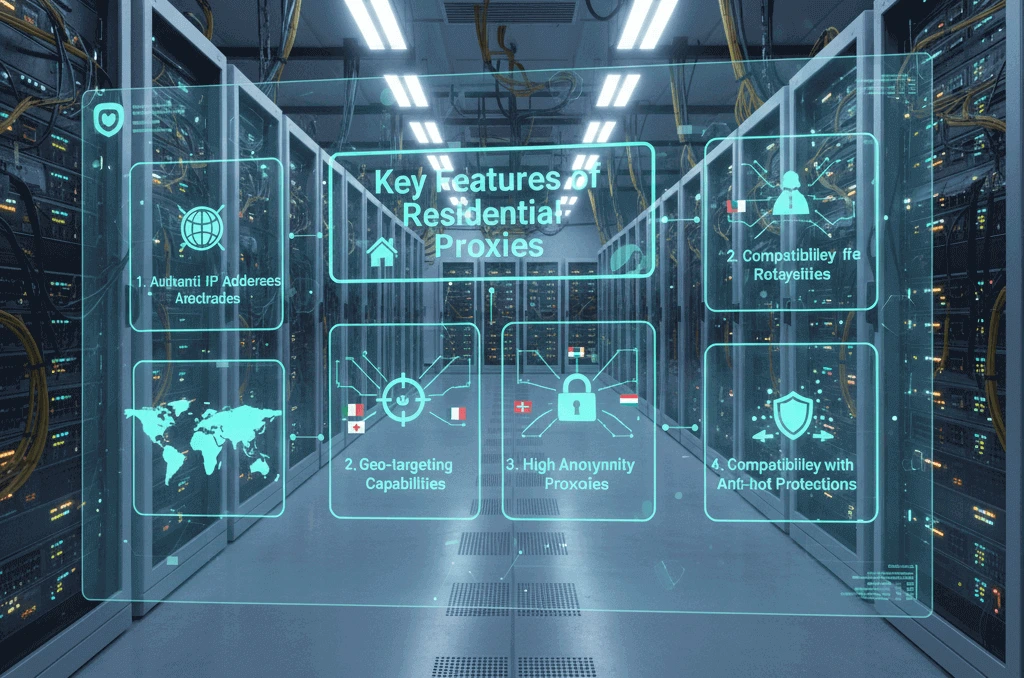
- Authentic IP Addresses
Residential proxies are tied to actual devices, making them less likely to be detected or blocked by websites compared to datacenter IPs.
- Geo-targeting Capabilities
Many providers allow users to select proxies from specific countries, cities, or even postal codes. For instance, you can use a Florida proxy server, a Norway web proxy, or an Austrian IP proxy for localized tasks.
- High Anonymity
Residential proxies hide your real IP address, ensuring your online identity and data remain protected.
- Compatibility with Anti-bot Protections
Because these IPs are seen as legitimate users, they can bypass CAPTCHA and bot protection systems more effectively. Tools like Captcha Weedmaps can be automated alongside residential proxies for web scraping purposes.
How Residential Proxies Work
Residential proxies function as intermediaries between your device and the internet. Here’s a breakdown of their working mechanism:
- The Intermediary Server
Like any proxy, a residential proxy acts as a middleman. When you send a request, it is first routed through the proxy server before reaching the target website. This allows the proxy to mask your original IP.
- Real IP Addresses from Homes
The distinguishing factor of a residential proxy is that it uses an IP from a real home connection. For example, a user in New York might use a New York proxy server to make requests appear as if they originate from that city. Similarly, businesses can leverage Los Angeles proxy servers or Maryland proxy servers to access location-specific content.
- Masking Your Identity
By using a residential proxy, your actual IP is hidden. The website sees the proxy IP instead, helping to maintain anonymity, prevent tracking, and reduce the risk of being blocked.
- Bypassing Geographic Restrictions
Residential proxies allow you to access geo-restricted content. For example, a Saudi Arabia proxy server can help you access content available only in Saudi Arabia, while a Finland IP proxy or Austria web proxy can help with region-specific research and marketing analytics.
Benefits of Residential Proxies
Residential proxies offer a wide range of advantages for personal users and businesses alike.
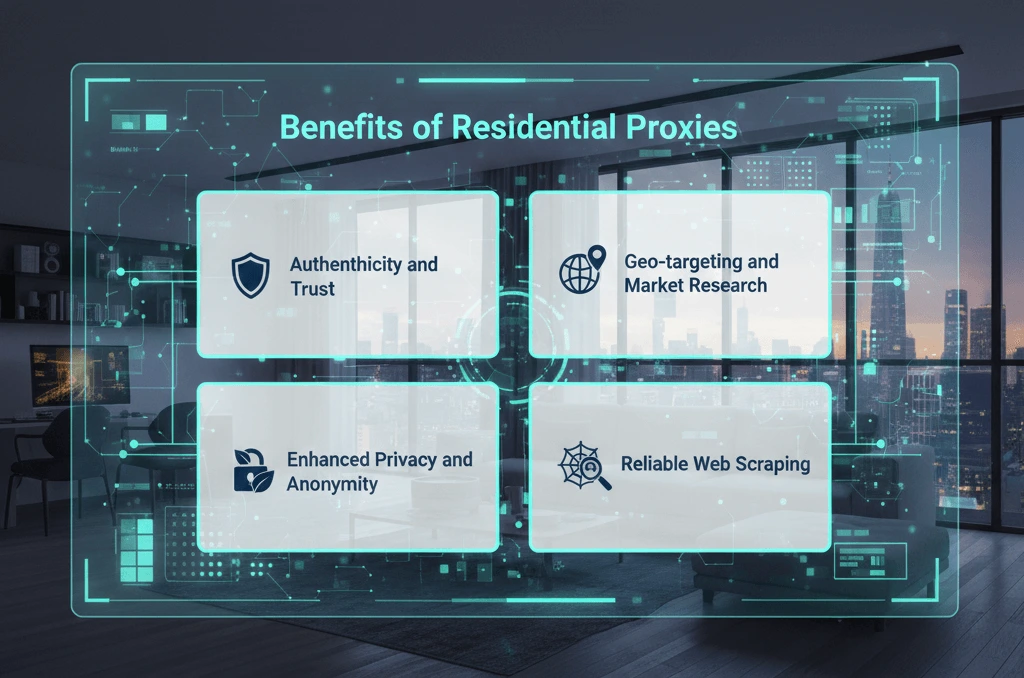
1. Authenticity and Trust
Because residential IPs are linked to real users, they have a higher reputation score than datacenter proxies. This makes them ideal for tasks like:
Web scraping for Shopee analytics tools
Bypassing CAPTCHAs with Captcha Weedmaps
Automating access to websites like JD.com API or ASOS API
2. Geo-targeting and Market Research
With residential proxies, businesses can perform geo-targeted research. Some examples include:
Using a Norway proxy web for localized campaigns
Accessing content via Gabon proxy or Hungary proxy online
Testing proxy server Colombia or Oman proxy server for international e-commerce
3. Enhanced Privacy and Anonymity
Residential proxies conceal your IP from websites and ISPs, protecting your online activities. This is critical when using Python requests SOCKS5 proxy examples or scraping sensitive data.
4. Reliable Web Scraping
For data-intensive tasks like eBay data scraping, residential proxies reduce the likelihood of IP blocks and account bans.
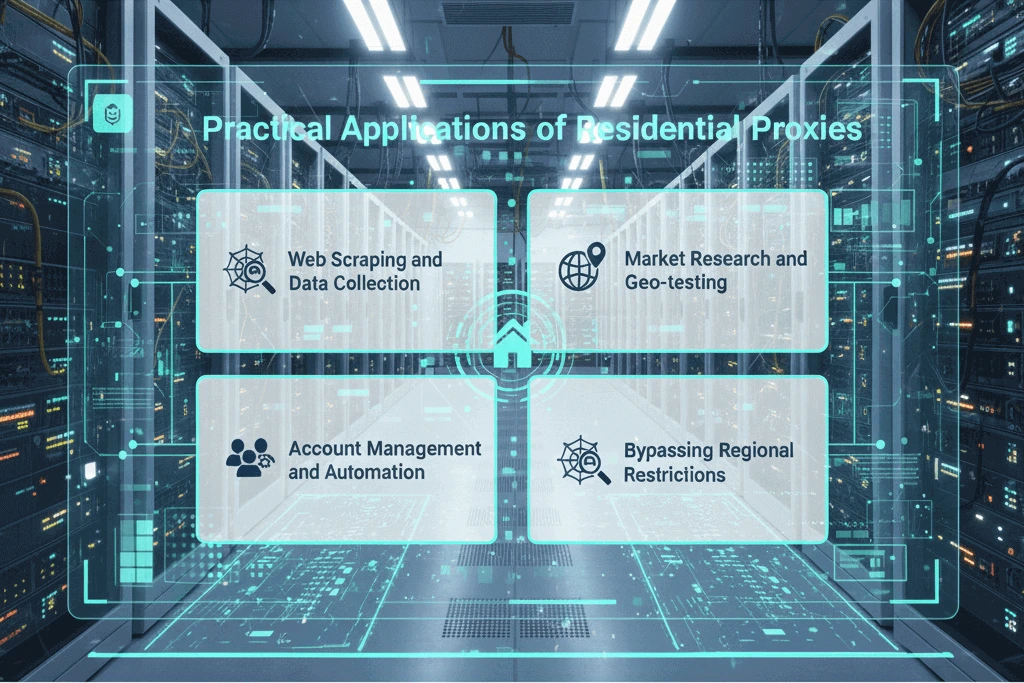
Practical Applications of Residential Proxies
Residential proxies are versatile and can be used across multiple scenarios:
1. Web Scraping and Data Collection
Businesses rely on residential proxies to scrape e-commerce platforms, marketplaces, and social media sites. Examples:
Amazon, JD.com, or ASOS API scraping
Collecting pricing data using target inventory checker online
Aggregating reviews or product listings for analytics
2. Market Research and Geo-testing
Marketers use residential proxies to simulate local users in different countries. Some use cases:
Testing region-specific ads with Proxy España or Proxy Brazil list
Verifying local search engine results using Naver search engine results API
Monitoring competitors with Proxy server Saudi Arabia or Proxy server Bahrain
3. Account Management and Automation
Residential proxies are essential for managing multiple accounts without triggering security alerts:
Social media automation for Instagram, TikTok, or Pinterest using Proxy Canada online
Multi-account management with Los Angeles proxy or Florida proxy server
4. Bypassing Regional Restrictions
Residential proxies allow users to access content restricted by country:
Streaming content using Webproxy Österreich or Sweden proxy site
Researching market trends in Oman proxy or Jordan proxy
Residential vs. Datacenter Proxies
| Feature | Residential Proxy | Datacenter Proxy |
| IP Type | Real home ISP IP | Data center IP |
| Detection Risk | Low | Higher |
| Geo-targeting | Flexible | Limited |
| Cost | Higher | Lower |
| Use Cases | Web scraping, account management, bypassing geo-blocks | Bulk scraping, automation, high-speed tasks |
Residential proxies excel in authenticity and low detection risk, making them preferable for sensitive tasks and regions with strict anti-bot policies.

FAQ: How to Choose a Residential Proxy
Q1: What IP locations should I look for in a residential proxy?
A1: Choose a provider that offers IP coverage in the countries or regions you need, such as Sweden, Finland, Austria, or Canada. Location accuracy is essential for geo-targeted tasks.
Q2: How important are bandwidth and speed when selecting a residential proxy?
A2: Very important. High bandwidth and stable speed are crucial for large-scale scraping or automation. Always evaluate real-world performance before committing.
Q3: How do I know if a residential proxy provider is reliable?
A3: Look for trusted, well-reviewed providers such as Bright Server, ResiProx static mobile proxies, or iBright Login. Provider reputation, uptime, and transparency matter.
Q4: Do I need static residential IPs for session-based tasks?
A4: Yes. If your project requires consistent long-term sessions—such as account management or login workflows—choose a provider that supports static or sticky residential IP sessions.
Q5: Will the proxy work with automation tools like ScrapeGraphAI or Python scripts?
A5: Ensure the provider supports integration with tools such as ScrapeGraphAI, Python requests, or Node unblocker revamped. Compatibility is key to stable automation.
Conclusion
Residential proxies are a powerful tool for anyone needing authentic IP addresses, privacy, and the ability to bypass geo-restrictions. They are widely used for web scraping, account management, market research, and bypassing CAPTCHAs. By selecting the right provider and leveraging geo-targeted IPs like New York proxy server, Los Angeles proxy server, or Saudi Arabia proxy server, businesses can ensure reliable and secure operations online.
Whether you are managing e-commerce stores, performing competitive research, or scraping data from various platforms, residential proxies provide a safer and more effective way to maintain online anonymity and access region-restricted content.