Understanding technographic vs firmographic data is crucial for B2B marketers and sales teams aiming for precision targeting in 2026. Firmographic data outlines a company’s basic profile—like size, industry, revenue, and location—helping identify “who” the ideal customer is. Technographic data, on the other hand, reveals the technologies a company uses, uncovering “how” they operate and potential pain points or opportunities.
As global IT spending surges toward double-digit growth in 2026, combining these datasets drives up to 30-40% better conversion rates and shorter sales cycles, according to recent industry reports. This comprehensive guide dives into the difference between technographic and firmographic data, real-world examples, the benefits of integration, and leading providers.
By mastering technographic vs firmographic data, you’ll craft hyper-personalized campaigns, spot intent signals early, and avoid wasting resources on mismatched prospects. The ultimate takeaway: firmographics lay the foundation, while technographics provide the intent layer—together, they create unbeatable B2B strategies for scalable growth.
What is Firmographic Data?
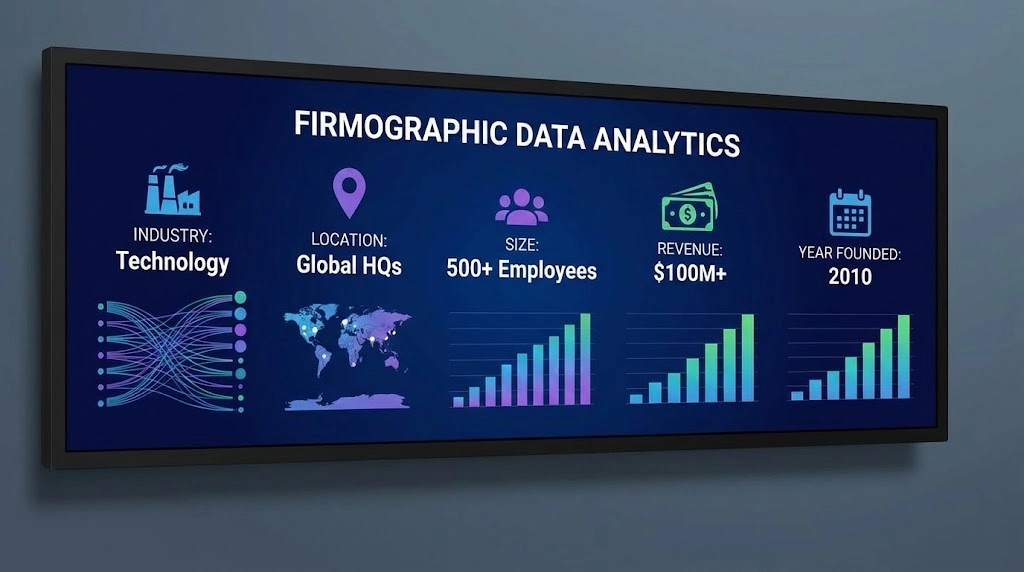
Firmographic data (or firmographics) describes the structural and demographic-like attributes of businesses, similar to how demographics profile individuals.
Common Firmographic Data Examples
Firmographics answer foundational questions for segmentation:
- Company size (employee count or revenue bands)
- Industry/sector (e.g., fintech, manufacturing via NAICS codes)
- Location (HQ, branches, geographic revenue)
- Annual revenue
- Ownership type (public, private, nonprofit)
These static attributes excel at building ideal customer profiles (ICPs) and broad market segmentation.
| Firmographic Attribute | Description | Marketing Use Case |
| Employee Count | 1-50, 51-200, etc. | Target SMBs for affordable tools |
| Industry | Software, Healthcare | Customize messaging to sector regulations |
| Revenue | 10M-50M | Prioritize high-value ABM accounts |
| Location | US West Coast | Run regional promotions |
What is Technographic Data?
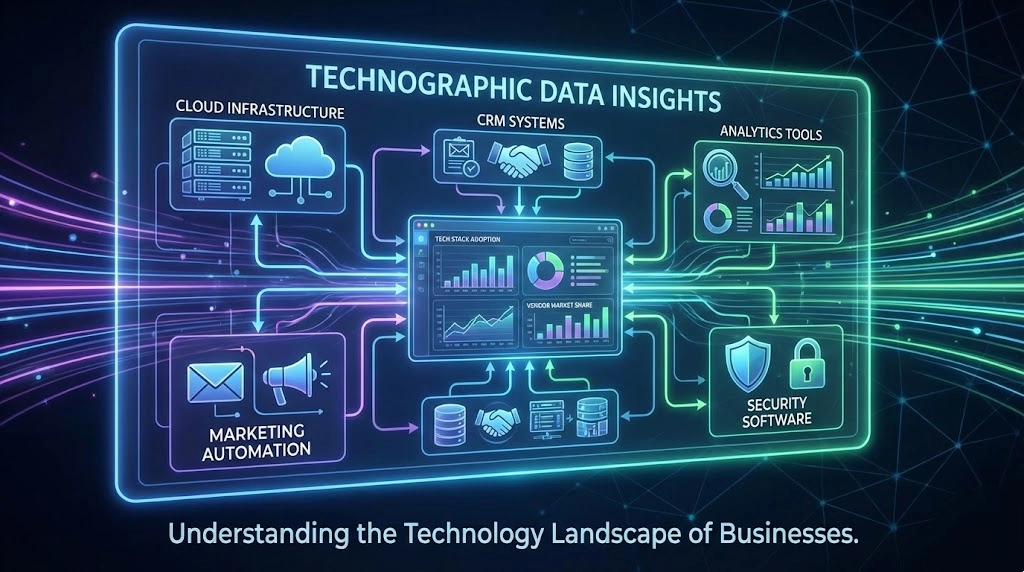
What is technographic data? It’s the profile of a company’s technology stack—software, hardware, platforms, and tools in use. Also known as technographics or technology data, it reveals digital maturity and operational insights.
Technographic Data Examples
Typical technographic data examples include:
- CRM: Salesforce, HubSpot
- Cloud: AWS, Azure, Google Cloud
- Marketing Automation: Marketo, Pardot
- Analytics: Google Analytics, Tableau
- E-commerce: Shopify, Magento
- Security: Okta, Cloudflare
Advanced app technographics track mobile/web apps, while customer technographics highlight adoption patterns for upsell opportunities.
Key Differences: Technographic vs Firmographic Data
The core difference between technographic and firmographic data is focus and dynamism:
| Aspect | Firmographic Data | Technographic Data |
| Primary Focus | Company structure (“Who?”) | Technology usage (“How?”) |
| Data Nature | Mostly static | Dynamic (upgrades, new adoptions) |
| Key Insights | Basic fit and segmentation | Intent, compatibility, pain points |
| Sources | Public filings, directories | Web signals, installs, tracking |
| Best For | ICP building, broad targeting | Personalization, displacement |
Firmographics confirm structural alignment; technographics ensure technical readiness—reducing unqualified outreach.
How Technographics and Firmographics Work Together
Integrating firmographic and technographic data creates a 360-view:
- Filter with firmographics (e.g., mid-market SaaS companies).
- Refine with technographics (e.g., using legacy CRM).
- Personalize: “Upgrade your on-premise system to our cloud-native solution.”
This boosts engagement 2-3x and accelerates deals.
Technographics in marketing enable technographic segmentation for competitor displacement or integration pitches.
Top Technographic Data Providers in 2026
Selecting the best technographic data providers requires accuracy, coverage, GDPR compliance, and integrations. Leaders include Cognism, HG Insights, ZoomInfo, Clearbit, Demandbase, and SalesIntel.
For custom gathering of technographics data (e.g., via ethical web scraping for public signals), tools like OKKProxy provide premium residential proxies with 50M+ clean IPs, global coverage, and high success rates—ideal for compliant data enrichment without bans.
Complementary options: NiuProxy for low-latency needs, ColaProxy for versatile mixes.
External resources:
- ZoomInfo on Firmographic vs Technographic
- Cognism Guide
FAQs: Technographic vs Firmographic Data
What is the main difference between technographic and firmographic data?
Firmographics focus on company basics; technographics on tech stack for intent.
Why combine technographic and firmographic data?
For precise targeting—structural fit plus technical alignment.
What are good technographic data providers in 2026?
Cognism, HG Insights, ZoomInfo; supplement with proxies like OKKProxy for custom insights.
Is technographic segmentation effective?
Yes—higher relevance leads to better conversions.
Mastering technographic vs firmographic data is essential for 2026 B2B success. Start layering them today for superior results.