Summary:
Geographical pricing is a strategic calculation where businesses set different price points for the same product based on a consumer’s physical location. This practice is driven by shipping logistics, regional taxes, and local purchasing power. For digital marketers and SEO professionals, these price fluctuations can skew market research and competitive analysis.
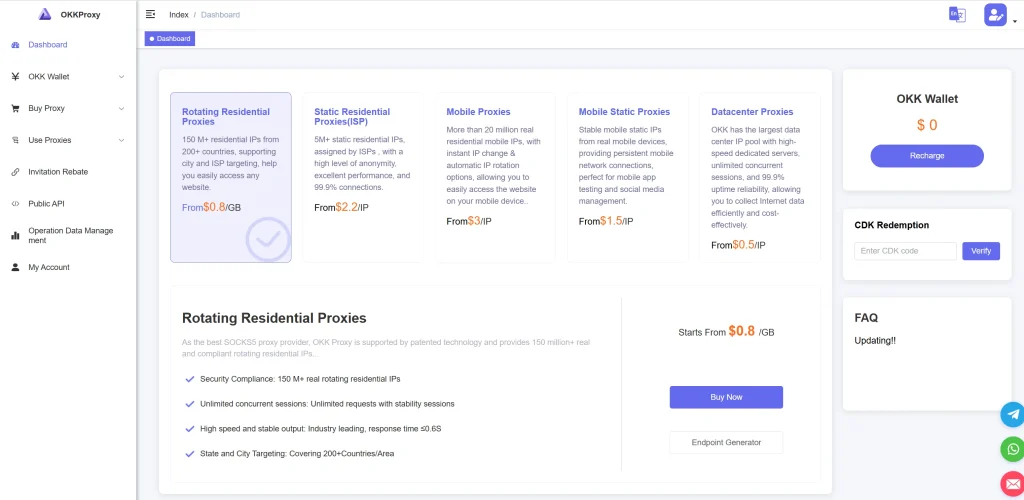
By utilizing OKKProxy’s diverse fleet—including rotating residential and mobile proxies—businesses can bypass location-based triggers, view accurate global data, and ensure their pricing strategies remain competitive in every corner of the world.
Why Prices Vary Worldwide: Understanding Geographical Pricing
Have you ever wondered why a flight booked from London costs $200 more than the exact same flight booked from a device in Bangkok? Or why a software subscription in the US carries a premium price tag while the same service is offered at a discount in emerging markets?
This phenomenon is known as geographical pricing, and in today’s hyper-connected digital economy, it is more prevalent than ever. Whether you are an SEO professional tracking SERPs or a data analyst monitoring global competitors, understanding how location influences cost is essential for maintaining a competitive edge.
What is the Meaning of Geographic Pricing?
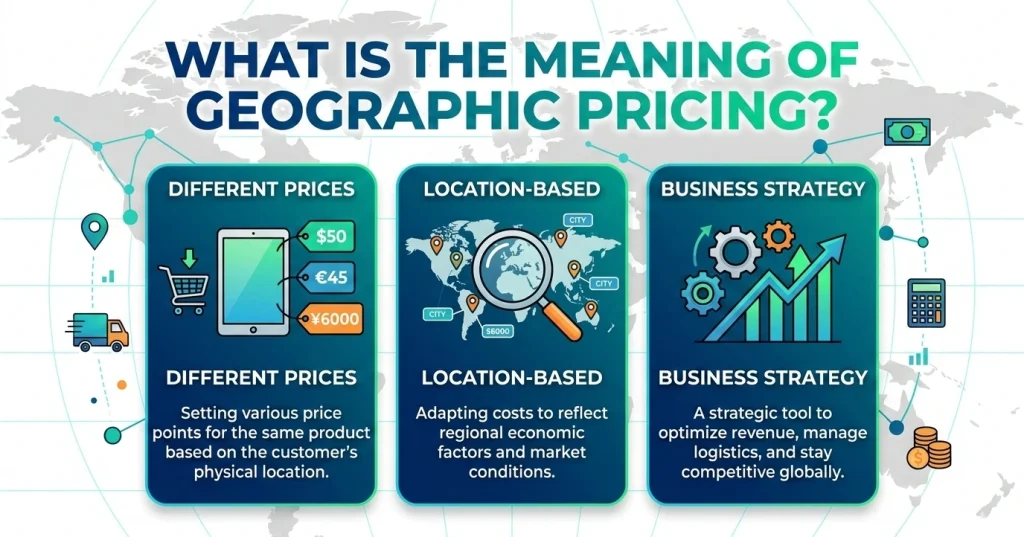
To put it simply, geographical pricing is a strategy where a company adjusts the sale price of its goods or services based on the buyer’s geographic location. It is a form of price discrimination that allows businesses to optimize their revenue by accounting for the unique economic conditions of different regions.
From a business perspective, setting a single global price is rarely efficient. A price that is affordable in Switzerland might be completely inaccessible in Vietnam. Conversely, a price set for the Vietnamese market would leave massive amounts of “money on the table” if applied to Swiss consumers.
How Does Location Affect Pricing?
When you browse an online store, the website uses your IP address to determine your location. This data allows the server to:
- Display the local currency.
- Apply regional taxes (like VAT or Sales Tax).
- Adjust the base price according to local demand and competition.
7 Core Reasons Why Businesses Use Geographical Pricing Strategies
Understanding the “why” behind these price shifts helps businesses develop better counter-strategies. Here are the primary drivers:
1. Shipping and Logistics Costs
For physical goods, the distance between the warehouse and the customer is the most obvious factor. A company in California selling to a customer in New York faces lower freight costs than if they were selling to someone in Tokyo.
2. Local Market Competition
In regions where a company has many competitors, they may lower their prices to stay relevant. In “monopoly” regions where they are the only provider, prices often trend higher.
3. Purchasing Power and Exchange Rates
Economic strength varies by country. Businesses often lower prices in regions with lower average incomes to ensure their products remain “marketable,” a practice common in the gaming and SaaS industries.
4. Regional Taxes and Import Duties
Each country has its own fiscal policy. High import tariffs or luxury taxes in certain nations are often passed directly to the consumer through higher localized pricing.
5. Demand Fluctuations
Seasonal demand can vary by location. Winter clothing is cheaper in the Southern Hemisphere during July, while prices peak in the Northern Hemisphere during the same period.
6. Local Marketing Costs
The cost of acquiring a customer (CAC) via Google Ads or local media varies. If it costs more to advertise in London than in Manchester, the product price in London might reflect that overhead.
7. Regulatory Requirements
Some regions require specific labeling, certifications, or legal compliance (like GDPR in Europe), which can add to the operational cost of doing business in that specific location.
Real-World Geographical Pricing Examples
| Industry | Example of Geographic Pricing | Strategy Used |
| Airlines | Flights are cheaper when booked from “low-income” country IPs. | Yield Management |
| Streaming | Netflix subscriptions cost significantly less in Turkey than in the UK. | Purchasing Power Parity |
| E-commerce | Amazon prices can fluctuate based on the user’s zip code. | Dynamic Zone Pricing |
| Software | SaaS tools often offer “Regional Pricing” for Asia-Pacific clients. | Market Penetration |
The Hidden Pain Point: Data Inaccuracy in SEO and Marketing
For digital marketers, geographical pricing creates a massive hurdle: Data Masking.
If you are trying to conduct competitive research for a client in Germany while sitting in an office in New York, the data you see is likely wrong. Without the right tools, you are viewing the “New York version” of the world. This leads to:
- Inaccurate SERP tracking.
- Corrupted price-comparison data.
- Failed ad verification (not seeing the ads your competitors are running in other regions).
How OKKProxy Helps You Master Global Pricing Data
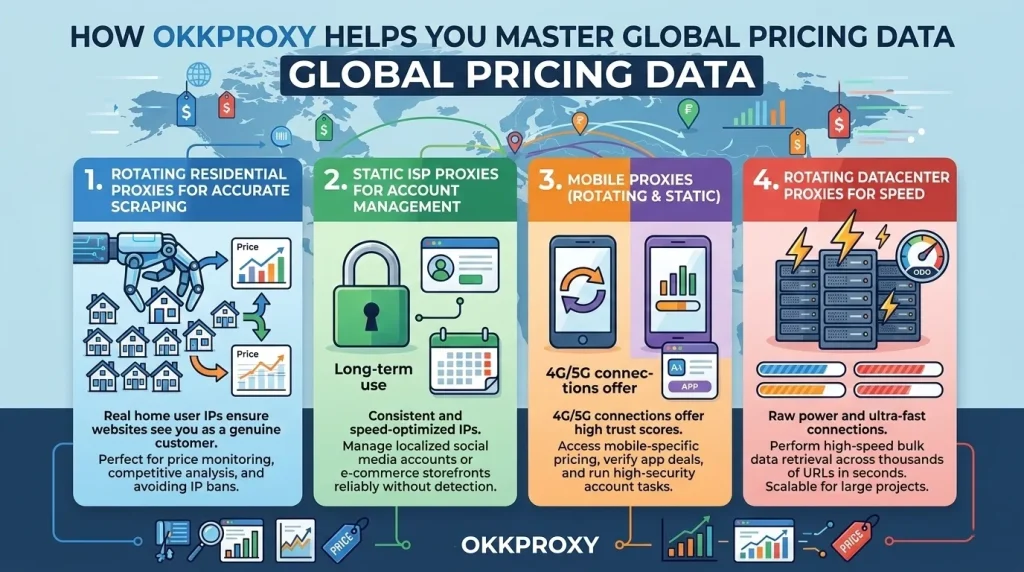
To overcome the barriers of geographical pricing, you need to see the internet through the eyes of a local. This requires high-quality, stable proxies that provide legitimate regional IP addresses.
1. Rotating Residential Proxies for Accurate Scraping
Our rotating residential proxies are sourced from real home users. When you use a residential IP from Paris, the target website sees you as a genuine French consumer. This is the gold standard for price monitoring and avoiding IP bans.
2. Static ISP Proxies for Account Management
For tasks that require a consistent identity, such as managing a localized social media account or an e-commerce storefront, static ISP proxies offer the perfect blend of data center speed and residential legitimacy.
3. Mobile Proxies (Rotating & Static)
Mobile users often see different prices than desktop users. Using rotating mobile proxies allows you to verify mobile-only discounts and app-based pricing strategies with the highest level of anonymity.
4. Rotating Datacenter Proxies for Speed
When you need to perform high-speed bulk data retrieval across thousands of pages where IP trust scores are less critical, rotating datacenter proxies provide the raw bandwidth needed for massive scale.
Answer-Style Guide: Frequently Asked Questions
What is an example of a geographic pricing strategy?
One common strategy is Zone Pricing. A manufacturer might divide a country into “zones” based on distance from the factory. Customers in Zone 1 pay the base price, while customers in Zone 4 (the furthest) pay a premium to cover the transport costs.
Do prices change depending on location for digital products?
Yes. Digital products often use “Value-Based Pricing” by region. Since there are no shipping costs, the price is determined by what the local market can bear. This is why a video game might cost $60 in the US but only $30 in Brazil.
How do I bypass geographical pricing to get the best deal?
By using a residential proxy, you can mask your true location and browse from a country where the product is cheaper. This is a common tactic for businesses looking to save on global software licenses or travel costs.
Checklist for Effective Global Price Monitoring
To ensure your market research isn’t being skewed by location-based triggers, follow this checklist:
- Identify Target Regions: Determine exactly which countries or cities you need to monitor.
- Select the Right Proxy Type: Use Residential IPs for scraping and Mobile IPs for app-based data.
- Clear Browser Cookies: Always use “incognito” or a clean session to prevent old location data from interfering.
- Verify IP Leakage: Ensure your proxy provider (like OKKProxy) offers DNS leak protection.
- Rotate Regularly: Avoid triggering “bot detection” by rotating your IPs at set intervals.
Takeaway: Knowledge is Power (And Profit)
In a world where geographical pricing is the norm, being “location-agnostic” is a major competitive disadvantage. Whether you are protecting your brand’s price integrity or hunting for the best market entry point, you must have the ability to see the global market as it truly is.
OKKProxy provides the stability, speed, and geographic coverage necessary to navigate these complex pricing landscapes. By choosing the right proxy type for your needs, you can turn location-based barriers into opportunities for growth.
Stop guessing what the world is paying. Get started with OKKProxy today and unlock a truly global perspective.