Quick Answer
Dynamic Residential Proxies make ad verification truly limitless by using real ISP-assigned IP addresses that rotate automatically, allowing advertisers to verify ads at scale without detection, geo-blocking, or IP bans. For enterprises, agencies, and regulated industries, this means higher data accuracy, lower fraud exposure, and stable long-term verification—especially when powered by a cost-efficient provider like OkkProxy.
Introduction: Why “Limitless” Ad Verification Has Become a Business Requirement

Ad verification is no longer just a brand-safety checkbox—it is now a financial, legal, and operational necessity. As global ad spend continues to grow, even a small percentage of fraud, misplacement, or cloaking can translate into millions of dollars in wasted budget for high-spend advertisers.
At the same time, platforms such as Google, Meta, and major DSPs have introduced stricter advertiser and domain verification requirements. Many teams struggle with ad account verification, delays when they verify a new domain, or recurring Google Ads verification problems caused by inconsistent signals, shared IPs, or automated traffic flags.
This is where Dynamic Residential Proxies fundamentally change how ad verification is performed.
Bottom line: When implemented correctly, Dynamic Residential Proxies allow organizations to perform ad verification without limits—across regions, platforms, and regulatory environments—while maintaining accuracy, compliance, and long-term account stability.
What Are Dynamic Residential Proxies?
A Dynamic Residential Proxy routes traffic through real residential IP addresses assigned by Internet Service Providers (ISPs) to actual households. Unlike static proxies, these IPs rotate automatically—per request or session—making each interaction appear as a unique, genuine user.
This combination of real-user origin + dynamic rotation is what makes Dynamic Residential Proxies ideal for ad verification.
Key Characteristics
- ISP-issued residential IPs (not datacenter IPs)
- Automatic IP rotation
- Large global IP pools
- Country, state, and city-level geo-targeting
Why Ad Verification Fails Without Residential Proxies
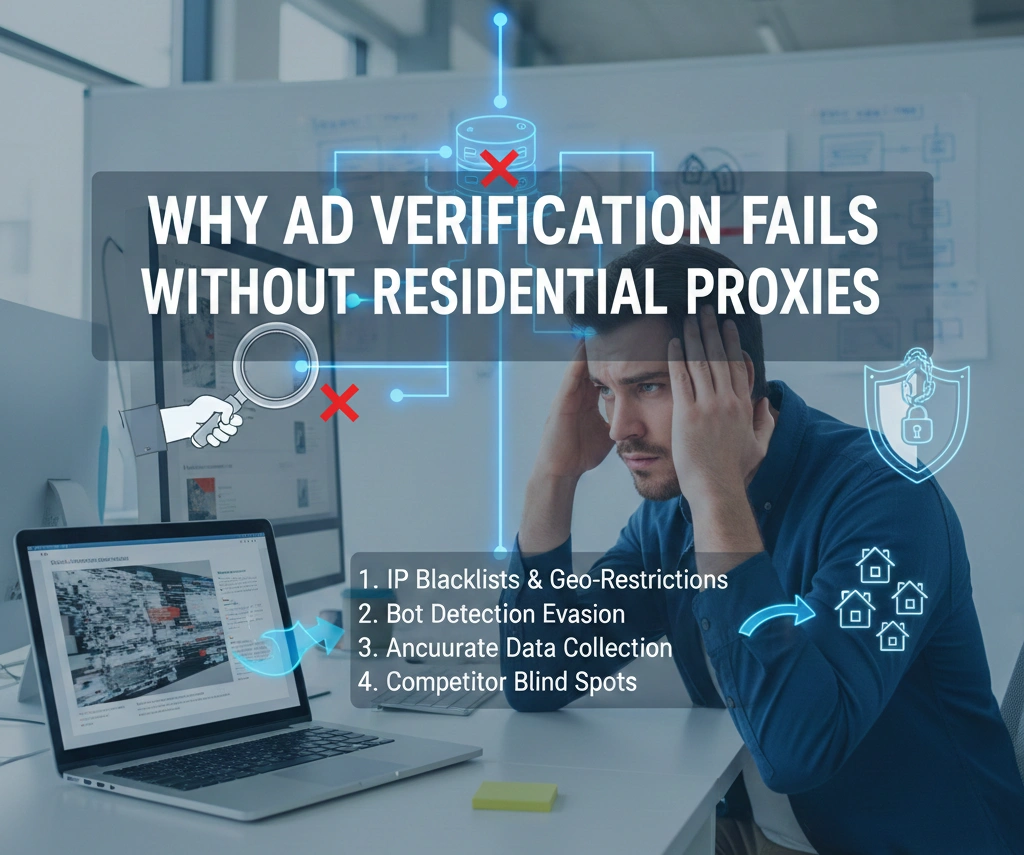
Before adopting Dynamic Residential Proxies, many organizations relied on tools that simply cannot reflect real user experiences.
Common Limitations of Traditional Methods
- Datacenter proxies are easily detected and blocked
- VPNs suffer from shared IP reputations and poor geo accuracy
- Static residential proxies become fingerprinted over time
As a result, advertisers often see a different version of ads than real users—missing cloaked content, geo-specific creatives, or policy violations.
How Dynamic Residential Proxies Enable Limitless Ad Verification
1. Real User Appearance That Platforms Trust
Dynamic Residential Proxies use IPs that originate from real residential networks. From the perspective of ad platforms and fraud-detection systems, traffic looks indistinguishable from genuine human activity.
This is critical for:
- Programmatic ad verification
- Influencer and affiliate compliance checks
- Brand safety audits
2. Automatic IP Rotation Prevents Blocking
Dynamic rotation ensures that no single IP is overused. Each verification request can originate from a new residential identity, reducing:
- IP bans
- CAPTCHA challenges
- Rate limiting
This makes large-scale, continuous monitoring possible.
3. Accurate Geo-Targeted Ad Verification
With Dynamic Residential Proxies, advertisers can verify:
- Localized ad creatives
- Region-specific landing pages
- Geo-restricted offers
This is essential for global retailers, financial institutions, and regulated brands that must ensure ads are displayed correctly in each market.
4. Cloaking and Fraud Detection
Ad cloaking is designed to show one version of content to bots and another to real users. Because Dynamic Residential Proxies behave like real users, they reveal:
- Hidden redirects
- MFA (Made-for-Advertising) placements
- Fraudulent creatives
5. Massive Scalability Without Data Distortion
High-spend advertisers and agencies need thousands—or millions—of verification checks. Dynamic Residential Proxies support high concurrency without triggering platform defenses, enabling truly limitless ad verification.
6. Solving Google Ads Verification Problems
Many Google Ads verification problems stem from inconsistent traffic signals. Dynamic Residential Proxies help by:
- Simulating real user interactions
- Validating how ads appear to actual audiences
- Supporting stable ad account verification workflows
This reduces false disapprovals and verification delays.
7. Compliance Monitoring for Regulated Industries
For finance, healthcare, alcohol, and HFSS brands, ad verification is now a legal requirement in many regions. Dynamic Residential Proxies allow 24/7 monitoring across platforms to ensure ads meet regulatory standards.
Ad Verification Checklist (Enterprise-Ready)
Use this checklist to validate your verification setup:
- Use Dynamic Residential Proxies, not datacenter IPs
- Enable automatic IP rotation
- Match proxy geo-location to campaign targeting
- Verify creatives, placements, and landing pages
- Monitor Google Ads and programmatic inventory
- Log discrepancies and compliance risks
- Maintain long-term IP stability
Why OkkProxy Is Built for Ad Verification at Scale
Proven Infrastructure for Dynamic Residential Proxies
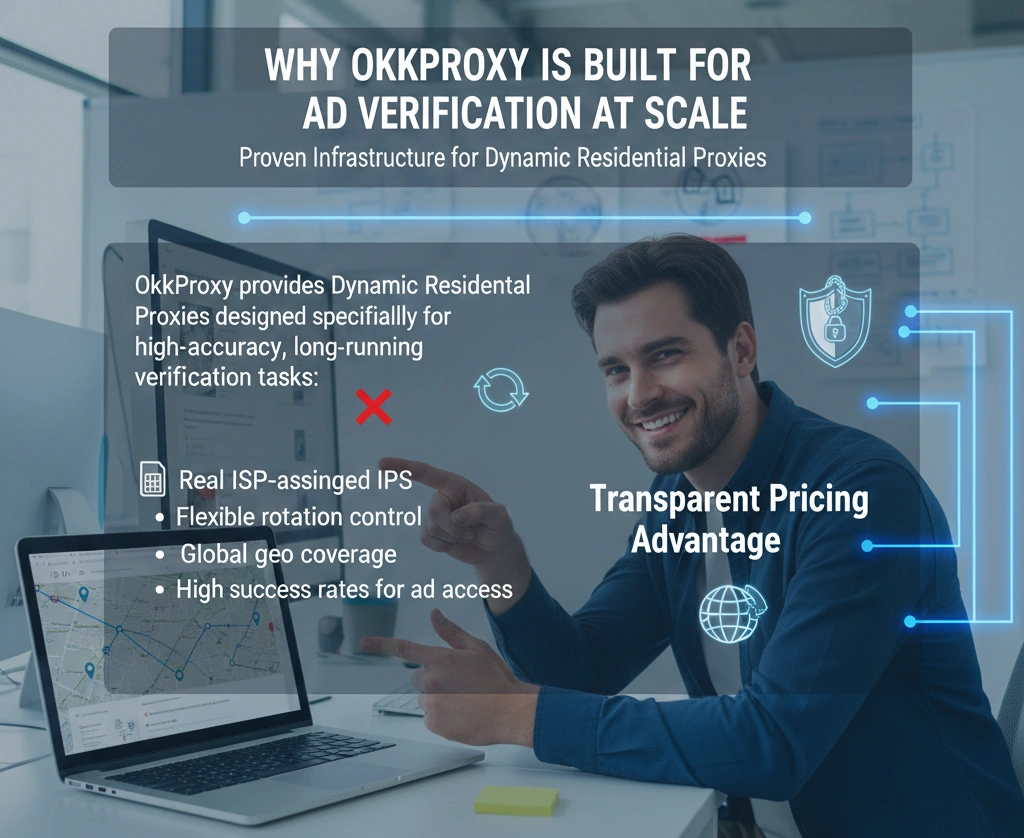
OkkProxy provides Dynamic Residential Proxies designed specifically for high-accuracy, long-running verification tasks:
- Real ISP-assigned IPs
- Flexible rotation control
- Global geo coverage
- High success rates for ad access
Transparent Pricing Advantage
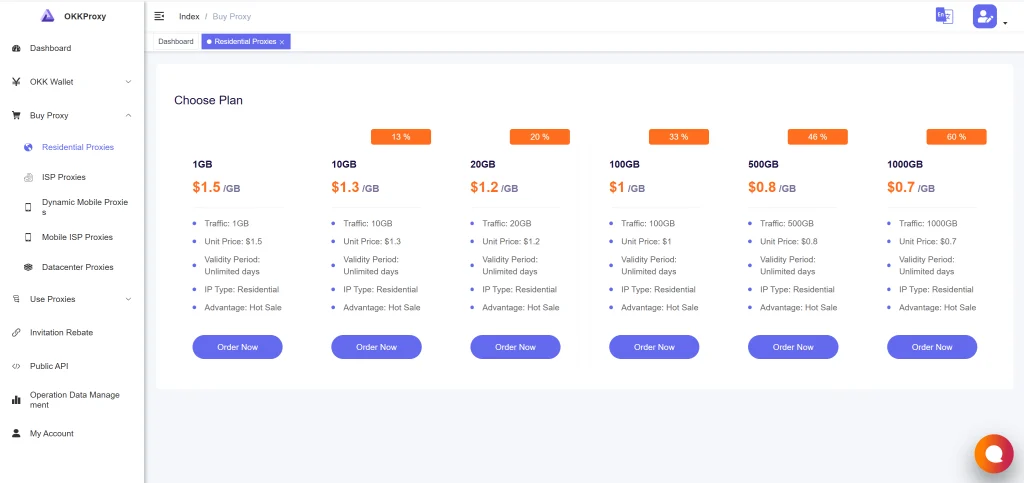
Unlike many providers with complex or inflated pricing models, OkkProxy offers clear, usage-based pricing, making large-scale ad verification financially sustainable for agencies and enterprises.
This pricing advantage is especially valuable for:
- Media buying agencies
- DSPs and SSPs
- Multi-brand advertisers
(See OkkProxy’s official pricing page for current plans below.)
Comparison Table: Proxies for Ad Verification
| Proxy Type | Detection Risk | Geo Accuracy | Scalability | Cost Efficiency |
| Datacenter Proxies | High | Low | Medium | Low |
| VPNs | Medium | Low | Low | Medium |
| Static Residential | Medium | Medium | Medium | Medium |
| Dynamic Residential Proxies | Low | High | High | High (OkkProxy) |
FAQ about Ad Verification proxies
What are ad verification proxies used for?
They are used to confirm ad placement, detect fraud, validate geo-targeting, and ensure compliance with platform and regulatory rules.
Where can I buy ad verification proxies for monitoring online ad campaigns?
Professional providers like OkkProxy offer Dynamic Residential Proxies optimized for ad verification at scale.
What are the best ad verification proxy services for digital advertisers?
The best services combine real residential IPs, automatic rotation, geo precision, and transparent pricing—core strengths of OkkProxy.
Final Takeaway
Dynamic Residential Proxies are no longer optional for serious ad verification. They provide the accuracy, scale, and reliability required by modern advertisers—while protecting budgets, brand reputation, and compliance status.
With OkkProxy’s Dynamic Residential Proxies, organizations can finally achieve ad verification without limits—technically, geographically, and economically.