Quick Summary: Why Knowing the Origin of Your IPs is Essential
Not all proxies are created equal. The origin of your IP addresses directly impacts your project’s success, legal compliance, and data security. This guide explores proxy sourcing across datacenter, residential, mobile, and ISP networks.
By analyzing industry-standard procurement models alongside real-world enterprise deployment challenges, we explore why proxy source transparency is no longer optional for modern digital operations. Discover how okkproxy builds ethically sourced, highly resilient proxy networks that protect your brand reputation while maximizing operational uptime.
Anyone Else Sketch Out About Where Their Proxies Actually Come From?
If you run large-scale web scraping operations, manage multi-account social media deployments, or execute programmatic ad verification, that nagging doubt isn’t just paranoia—it is a highly valid operational intuition.
In the early days of web scraping, a proxy was simply viewed as an anonymous gateway. You bought a list of IPs, fed them into your scraper, and collected data. Today, the infrastructure landscape has completely changed. Modern anti-bot systems like Cloudflare, DataDome, and Akamai don’t just look at behavior; they perform deep contextual inspection on the IP address itself. If your proxy provider relies on obfuscated, compromised, or outright illicit sourcing methods, your infrastructure will face immediate blocks, or worse, your organization could face significant legal liability.
Achieving total proxy source transparency is the foundational pillar of modern proxy infrastructure. This comprehensive guide provides a detailed look into the actual origin of IP addresses, analyzes the mechanics of ethically sourced networks, and offers practical methodologies to verify that your proxy infrastructure is clean, compliant, and optimized for performance.
1. What Is the Purpose of a Proxy? The Technical Reality
Before exploring proxy origins, it is essential to answer a fundamental foundational question: What is the purpose of a proxy?
At its core, a proxy server acts as an intermediary layer between your local machine (or cloud server) and the target destination on the internet. Instead of making a direct connection, your data packets travel through the proxy server, which alters the source IP address before forwarding the request.
When considering where do i get my proxy address from, the answer spans a wide range of network infrastructures. For developers building custom web scrapers, a common question is where do socks 5 proxies come from. SOCKS5 proxies operate at Layer 5 (the Session Layer) of the OSI model, meaning they process arbitrary traffic—including TCP, UDP, and DNS lookups—without altering the data payload. These can originate from data centers, residential routers, or mobile towers. The crucial distinction lies not just in the protocol used, but in how the underlying IP network was built, managed, and verified.
2. Breaking Down the Grid: Where Do Proxies Actually Originate?
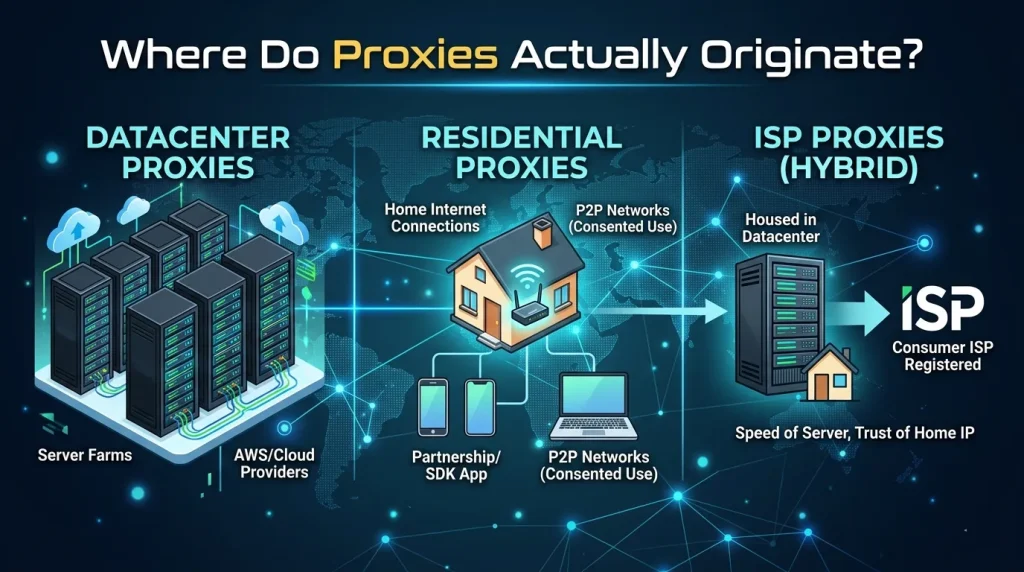
Proxy architecture is categorized into distinct classes based on network placement, routing infrastructure, and organizational registration.
Rotating Datacenter Proxies
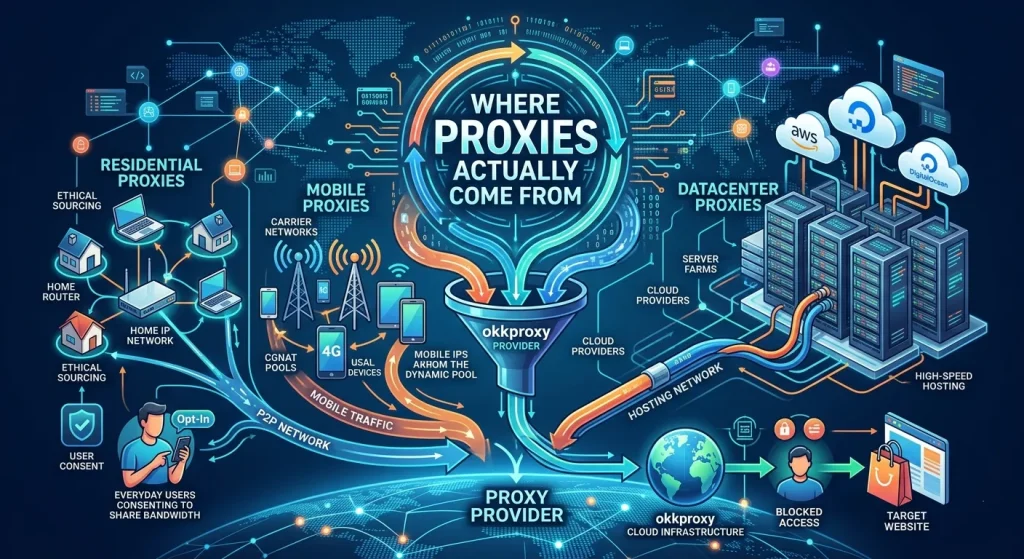
These originate from massive, professional server farms and cloud computing centers (such as AWS, DigitalOcean, Linode, or Equinix). When a provider allocates a datacenter IP, they are assigning an address within a block owned by an autonomous system network (ASN) explicitly registered to a data center.
- The Advantage: Unmatched bandwidth speeds, exceptionally low latency, and highly scalable deployment architecture.
- The Downside: High predictability. Because these IP ranges are publicly registered to hosting companies, target websites quickly identify and block them during automated scraping tasks.
Rotating Residential Proxies
Where does a residential proxy come from? These come from the actual home internet connections of everyday people, assigned by consumer Internet Service Providers (ISPs) like Comcast, AT&T, or BT. When a user visits a website through a residential proxy, the website sees a standard consumer connection, making these IPs highly effective for navigating complex anti-bot setups.
Rotating Mobile Proxies & Static Mobile Proxies
These IPs originate from cellular data carriers (such as Verizon, Vodafone, or T-Mobile) and are assigned directly to mobile devices (smartphones, 4G/5G dongles, and tablets) connected to cellular towers. Because thousands of legitimate mobile users frequently share a single public-facing IP via Carrier-Grade NAT (CGNAT), target websites rarely block these addresses. This makes both rotating and static mobile proxies incredibly resilient against strict anti-bot systems.
Static ISP Proxies
ISP proxies represent a hybrid architecture. They are hosted within enterprise data center environments but are explicitly leased and registered under consumer Internet Service Providers. This structure combines the high-speed connectivity and 100% uptime of a professional server environment with the high trust score of a residential connection.
3. The Mechanics of Sourcing: How Are Residential Proxies Sourced?
Understanding how are residential proxies sourced reveals a clear divide between ethical, transparent proxy networks and high-risk, unverified options. The industry relies on three primary procurement models:
The P2P SDK Integration Model (Ethical Baseline)
Legitimate proxy providers acquire residential IP access through managed peer-to-peer (P2P) networks. Providers partner with independent desktop and mobile application developers. The developer integrates a secure software development kit (SDK) into their application (e.g., a free VPN, a weather app, or a utility tool).
In exchange for downloading a free version of the app without ads, the consumer explicitly consents to share a fraction of their idle internet bandwidth and device resources. The proxy network only utilizes this device when it is idle, connected to Wi-Fi, and has sufficient battery capacity.
The Incentivized Value Exchange
Some applications explicitly pay users for their bandwidth. Programs allow users to intentionally opt into a proxy ecosystem, receiving monetary micro-rewards or platform credits in exchange for routing third-party traffic through their home routers.
Unethical and Illicit Sourcing (The Hidden Danger)
Unfortunately, some low-cost providers source IPs via malicious browser extensions, hidden ad-fraud scripts, or malware botnets. In these scenarios, a user’s computer or home router is co-opted into a proxy network without their knowledge or explicit consent.
Using unverified networks exposes your organization to severe security risks, as traffic could flow through compromised infrastructure, potentially leaking sensitive query data or violating international data privacy frameworks.
The Scale Paradox: Where Do Rotating Proxies Get So Many IPs?
A common structural question is: Where do rotating proxies get so many IP addresses from?
The vast scale of these pools relies on the churn inherent to global P2P networks. Because millions of users worldwide connect and disconnect from their home networks throughout the day, a residential proxy pool is constantly updating. Advanced proxy gateways leverage automated backconnect pools to dynamically assign a new inbound IP node from this shifting pool every time an application sends a request.
| Proxy Network Category | Primary Infrastructure Origin | Sourcing Integrity Level | Average Trust Score | Primary Business Use Case |
| Rotating Datacenter Proxies | Enterprise Server Farms / Cloud Providers | High (Verified via ASN) | Low | High-speed, high-volume scraping of unprotected targets |
| Rotating Residential Proxies | Household Consumer Routers (P2P SDKs) | High (Consent-Verified) | Very High | E-commerce scraping, GEO-targeted ad verification |
| Rotating Mobile Proxies | 4G/5G Cellular Carrier Networks | High (Via Consumer Sim Pools) | Maximum | Social media automation, anti-fraud testing |
| Static ISP Proxies | Leased Consumer Blocks in Data Centers | High (Direct Corporate Lease) | High | E-commerce multi-account management, localized SEO monitoring |
| Static Mobile Proxies | Fixed Cellular Carrier Allocations | High (Dedicated Sim Infrastructure) | Maximum | Long-session social management, secure checkout tasks |
4. The Legal and Regulatory Horizon: Is a Proxy Server Illegal?
When evaluating infrastructure safety, compliance teams frequently ask: Is a proxy server illegal? or Is proxy legal or illegal?
The short answer is: Using a proxy server is completely legal.
Proxies are standard networking components used globally for corporate cybersecurity, content delivery networks (CDNs), and privacy protection. However, the legality shifts significantly based on two critical variables: How the proxy was sourced and What data is being accessed through it.
From a regulatory standpoint, major global privacy frameworks like the General Data Protection Regulation (GDPR) in Europe and the California Consumer Privacy Act (CCPA) in the United States apply directly to proxy sourcing. If a proxy provider routes your scraping queries through a home device without the owner’s explicit opt-in consent, the provider is collecting and processing telemetry data illegally. Under strict compliance interpretations, your company could be held liable for utilizing a vendor that leverages non-compliant infrastructure.
5. Why Proxy Source Transparency Directly Impacts Your ROI
Investing in unverified, black-box proxy networks creates significant operational risks that can quickly harm your business metrics. Here are the five most critical risks associated with low-transparency providers:
IP Pool Contamination and False Submissions
When source procurement lacks transparency, providers often resell the same IP subnet across multiple accounts simultaneously. If a low-quality user abuses an IP range on an e-commerce platform, that entire block can face immediate subnet bans, causing unexpected errors for your automated workflows.
Silent Data Poisoning
Sophisticated anti-bot solutions don’t always block connection requests directly. Instead, they may silently deliver modified, synthetic data structures (honeypots) when they detect traffic originating from unverified or low-reputation IP networks. If your data parsing systems ingest this altered information, your analytics dashboards, price forecasting models, and competitive intelligence systems will be compromised.
Security Vulnerabilities and Inbound Exploits
If your proxy provider uses unverified routing layers, you run the risk of sending unencrypted corporate payloads through compromised consumer endpoints. Malicious actors controlling an intercepted node can execute Man-in-the-Middle (MitM) attacks, monitor your data streams, or inject malicious payloads back into your collection infrastructure.
Unpredictable Latency Spikes
Sourcing networks that tap into user devices without clear bandwidth boundaries cause severe speed fluctuations. When a home user begins a heavy download or stream, your scraping pipeline instantly stalls. Transparent sourcing ensures that bandwidth limits are contractually respected, maintaining stable request-response lifecycles.
Compliance Liability Exposure
When auditing data collection pipelines, corporate legal teams require clear chains of custody for all technical resources used. Running mission-critical infrastructure over networks that cannot prove their IP procurement origins leaves your firm vulnerable to external data privacy compliance audits.
6. The okkproxy Infrastructure Architecture
At okkproxy, we address these infrastructure challenges directly by building an enterprise-grade proxy platform focused on clear proxy source transparency, legal compliance, and reliable performance metrics.
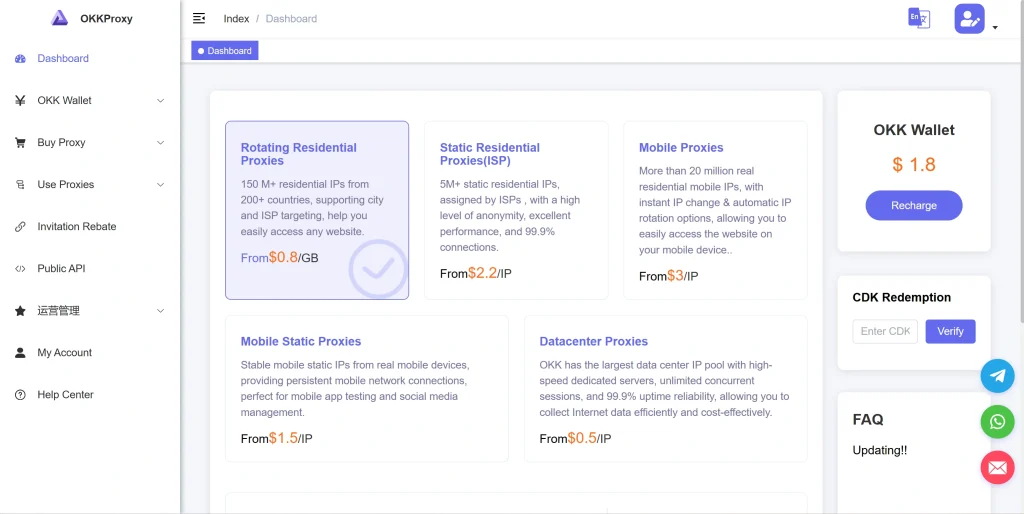
We manage a diverse network of over 60 million ethically sourced IP addresses across multiple specialized product categories:
- Rotating Residential Proxies: Built entirely on fully verified, consent-based P2P networks with clear value exchanges. These proxies offer precise city-level targeting capabilities and clean rotation intervals, making them ideal for high-trust web scraping tasks. Explore our deep-dive analysis on optimization strategies in What is Rotating Residential Proxy?.
- Static ISP Proxies: Sourced via direct corporate lease agreements with top-tier consumer ISPs. These proxies offer the underlying speed of an enterprise datacenter network paired with stable, long-term IP retention, which is perfect for managing complex e-commerce accounts and secure corporate profiles.
- Rotating Mobile Proxies: Connected directly via authentic 4G/5G mobile carrier networks. These proxies provide exceptional resilience against strict anti-bot detection systems during high-frequency data collection tasks.
- Static Mobile Proxies: Designed for operations requiring a persistent mobile network fingerprint over extended sessions, avoiding the sudden location changes common in standard rotation pools.
- Rotating Datacenter Proxies: Hosted within premium cloud infrastructure providers, offering high-volume processing capacity and fast delivery speeds for unprotected public web horizons.
Real-World Case Study: Resolving High-Volume Data Collection Friction
A global market intelligence firm was struggling to collect real-time pricing data from a major e-commerce marketplace. Using a standard, low-cost residential proxy vendor, their request failure rate regularly exceeded 34%, caused by continuous IP rotation errors and stealth anti-bot blocks.
After migrating to okkproxy’s ethically sourced Rotating Residential Proxies, their data collection workflows stabilized significantly. By coordinating their requests through clean, verified nodes with transparent ASN distributions, their request drop-off rate fell below 1.2%, helping them optimize their infrastructure costs and improve data reliability.
7. Operational Checklist: Evaluating an Enterprise Proxy Vendor
When deciding where should i get my proxy from, use this rigorous five-point procurement checklist to evaluate potential vendors:
- Explicit Consent Documentation: Does the vendor provide transparent, publicly accessible documentation detailing their user opt-in models, SDK privacy policies, and compensation frameworks?
- Comprehensive ASN Verification: Can the provider supply verifiable Autonomous System Numbers (ASNs) so you can confirm whether their residential pools are properly registered under consumer ISPs rather than disguised data centers?
- Data Privacy and Compliance Standards: Does the provider explicitly guarantee full compliance with GDPR, CCPA, and regional data privacy regulations within their contract terms?
- Real-Time Network Performance Telemetry: Does the vendor offer detailed performance dashboards that show live network latency, individual node success rates, and protocol error codes?
- Dedicated IP Pool Isolation: Does the infrastructure support isolated proxy allocations, ensuring that your enterprise data streams are kept completely separate from public user traffic?
8. Step-by-Step Technical Guide: How to Verify the True Origin of Your Proxy Address
Do not rely solely on a proxy provider’s marketing claims. Follow this technical guide to programmatically audit and verify the true origin, location, and reputation scores of your assigned proxy nodes.
Step 1: Querying Raw IP Node Metadata
Execute an authenticated routing call through your proxy endpoint to a public IP metadata repository (such as ipinfo.io or ipapi.co) to extract the true underlying connection details. For formal network assessment metrics, you can reference internet infrastructure databases maintained by organizations like the Internet Assigned Numbers Authority (IANA).
Bash
curl –proxy http://username:password@okkproxy_gateway_address:port http://ipinfo.io/json
Step 2: Evaluating the JSON Meta Payload
Analyze the returned data payload, focusing closely on the asn, company, and carrier parameters:
JSON
{
“ip”: “172.56.21.89”,
“hostname”: “mobile-customer.t-mobile.com”,
“city”: “Seattle”,
“region”: “Washington”,
“country”: “US”,
“loc”: “47.6062,-122.3321”,
“org”: “AS21928 T-Mobile USA, Inc.”,
“postal”: “98101”,
“timezone”: “America/Los_Angeles”,
“asn”: {
“asn”: “AS21928”,
“name”: “T-Mobile USA, Inc.”,
“domain”: “t-mobile.com”,
“route”: “172.56.0.0/16”,
“type”: “isp”
}
}
- Verification Metric: If you purchased premium residential proxies but the type field returns hosting or datacenter, your provider is misrepresenting their datacenter ranges. If it returns isp, your connection is verified.
Step 3: Performing a Deep System Fingerprint Scan
Anti-bot systems look closely for discrepancies between your browser’s fingerprint and the network configuration of the proxy. Run an advanced check to analyze open port signatures on your assigned node.
9. Frequently Asked Questions (FAQ)
Why is proxy source transparency important for enterprise scraping?
Without clear knowledge of where your IPs come from, your business risks using compromised or unverified devices. This can lead to frequent IP blocks, poor data accuracy, and potential legal exposure under modern data privacy frameworks.
What is the core difference between datacenter and residential proxy origins?
Datacenter proxies are generated in wholesale blocks within corporate server hubs and cloud providers. Residential proxies route traffic through real consumer household internet connections provided by consumer ISPs, giving them a much higher trust score when accessing protected websites.
Can using unverified proxy sources cause legal issues for my business?
Yes. If a proxy provider uses unethical sourcing methods, like routing traffic through compromised devices or unverified browser extensions without user consent, your company could face legal and regulatory risks under global data privacy frameworks like GDPR and CCPA.
How does okkproxy maintain a clean and reliable IP pool?
At okkproxy, we work with verified application networks and corporate ISP partners to ensure all IP addresses are obtained ethically and with explicit user consent. We continually monitor our proxy pools, removing low-performing or flagged nodes to deliver high success rates for your data operations.
Why do some residential proxies change IPs unexpectedly?
Residential proxies often change IPs because consumer devices frequently connect and disconnect from home networks. Ethical proxy networks use advanced backconnect servers to automatically handle these changes, rotating you to a clean, active IP node without disrupting your workflow.
Is scraping public web data with a proxy legally permitted?
Yes, collecting publicly available data is generally legal. However, your scraping operations must comply with regional data privacy laws, avoid accessing copyright-protected content, and respect the target server’s stability by managing your request volumes properly.
10. The Strategic Takeaway
Infrastructure transparency is a critical component of successful data extraction and automated workflows. Utilizing poorly sourced, unverified proxies creates significant risks, including frequent IP blocks, unreliable data quality, and potential security vulnerabilities.
Choosing a transparent provider like okkproxy protects your automated workflows, maintains your data integrity, and ensures compliance with modern privacy standards. Whether you need the high-volume capacity of Rotating Residential Proxies or the consistent, long-term stability of static ISP proxies, selecting a provider focused on source transparency helps safeguard your digital operations over the long term.
Ready to optimize your automated workflows with dependable, ethically sourced infrastructure? Explore our flexible, high-performance proxy plans today at okkproxy.