Introduction: Why Scraping Blocks Happen (and How Rotating Residential Proxies Solve Them for Good)
If you have ever built a web scraping script that worked perfectly during testing—only to get blocked once it scaled—you are not alone. Developers, data teams, SEO professionals, and eCommerce analysts all face the same frustrating problem: scraping scripts get blocked long before the data pipeline delivers value.
The reason is simple but often misunderstood. Modern websites no longer rely on basic IP bans alone. Instead, they use multi-layered anti-bot systems that analyze traffic patterns, IP reputation, browser fingerprints, and behavioral signals. Once your requests look automated, blocks are inevitable.
Here is the good news: most scraping blocks are predictable and preventable.
Based on years of real-world scraping experience and proxy infrastructure optimization, the most effective long-term solution is not just “using a proxy,” but using rotating residential proxies (also called dynamic residential proxies) correctly. When implemented properly, they distribute traffic across real residential IPs, mimic human browsing behavior, and dramatically reduce block rates.
Conclusion upfront: If your scraping scripts keep getting blocked, the root cause is almost always static traffic patterns and detectable IP sources. Rotating residential proxies—especially those backed by a large, high-quality residential proxy network like OKKProxy—is the most reliable way to fix this problem at scale.
This guide explains why blocks happen, how rotating residential proxies fix them, and how to apply proven methodologies that actually work in production environments.
Why Scraping Scripts Get Blocked
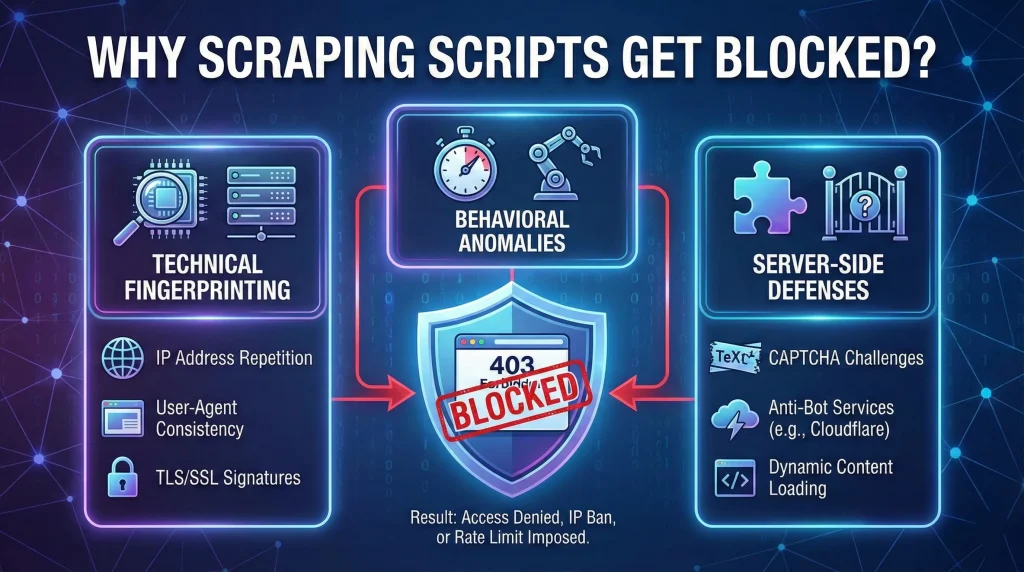
Before choosing any residential proxy service, it’s essential to understand why blocks occur in the first place.
1. IP Rate Limits and Traffic Thresholds
Most websites enforce rate limits per IP address. When too many requests come from the same IP address within a short time, the site assumes automation.
Typical symptoms:
- HTTP 403 / 429 errors
- Sudden CAPTCHAs
- Silent connection drops
This is especially common when using:
- Static residential proxy
- Residential static proxy
- Datacenter IPs
- VPN or residential VPN setups
2. Behavioral Analysis and Pattern Detection
Modern anti-bot systems go far beyond request counting. They analyze:
- Request timing consistency
- Navigation flow
- Page depth
- Interaction signals
Scripts that send requests at perfectly even intervals or crawl pages unrealistically fast are flagged—even if you rotate IPs poorly.
3. Datacenter and Low-Reputation IP Detection
Cheap datacenter IPs are trivial to detect. Even “proxy cheap” options advertised as residential often belong to hosting providers.
Why datacenter IPs fail:
- Easily identifiable ASN ranges
- Shared abuse history
- No ISP-level legitimacy
This is why many developers searching for a cheap residential proxy end up paying more in failed retries and blocked data.
4. Fingerprinting, JavaScript Challenges, and CAPTCHAs
Sites now combine IP checks with:
- Browser fingerprinting
- JavaScript execution tests
- Cookie and TLS analysis
A residential IP proxy alone is not enough unless paired with proper rotation and session management.
How Rotating Residential Proxies Fix Scraping Blocks
What Are Rotating Residential Proxies?
Rotating residential proxies (also known as dynamic residential proxies or residential rotating proxies) route your traffic through a large pool of real, ISP-assigned residential IPs and automatically rotate them.
Each request—or group of requests—appears to come from a different real household.
How They Solve Each Blocking Mechanism
| Blocking Mechanism | Why It Happens | How Rotating Residential Proxies Fix It |
| IP rate limits | Too many requests from one IP | Requests are distributed across rotating residential IPs |
| Behavioral patterns | Static timing & repetition | Rotation + session control breaks detectable patterns |
| Datacenter detection | Server-owned IP ranges | Residential IPs look like real users |
| Geo restrictions | Single-region IP | Geo-targeted residential IP rotation |
| CAPTCHAs | Suspicious traffic signals | Lower-risk IP reputation reduces triggers |
Real Advantage: Human Traffic Simulation
Unlike static or non-rotating residential proxies, rotating residential proxies mimic real human traffic at scale. This makes them ideal for:
- Large-scale scraping
- SERP monitoring
- Price intelligence
- Market research
- Ad verification
Rotating vs Static Residential Proxies: Which One Do You Need?
Static Residential Proxy
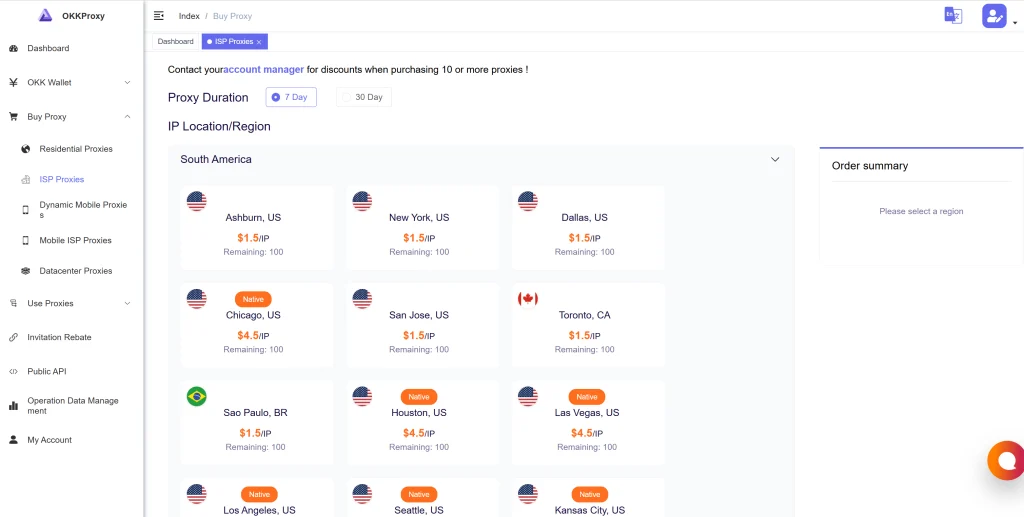
Best for:
- Long login sessions
- Account management
- Social media posting
Limitations:
- Easy to rate-limit
- Higher ban risk at scale
Rotating Residential Proxy (Recommended for Scraping)
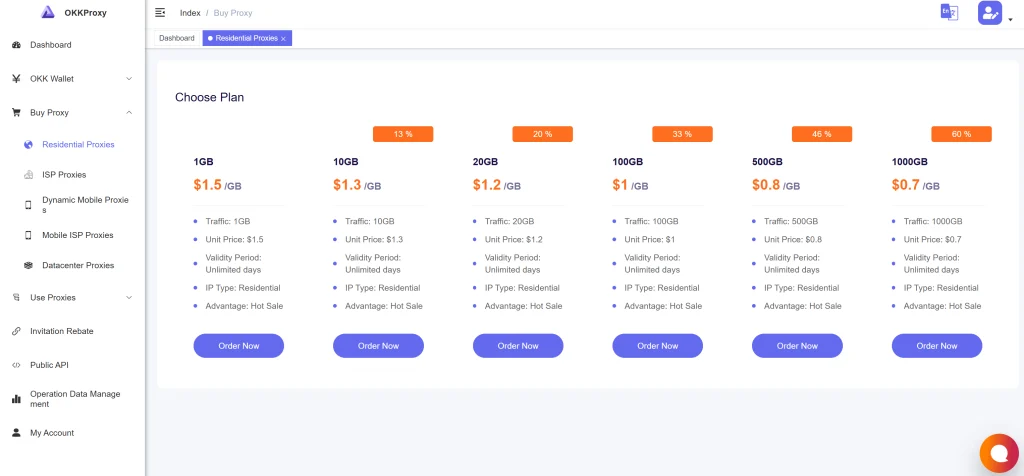
Best for:
- Web scraping
- Crawling
- Data aggregation
- Competitive intelligence
Verdict: For scraping, rotating residential proxies are objectively superior.
Best Practices: How to Use Rotating Residential Proxies Correctly
1. Use a Large, Clean Residential Proxy Network
The size and quality of the IP pool matter more than rotation frequency. Providers like OKKProxy focus on:
- Real ISP-sourced residential IPs
- Continuous pool refresh
- Low reuse frequency
This directly impacts success rates.
2. Combine IP Rotation with Request Randomization
Do not rotate IPs, but keep robotic behavior.
Best practice:
- Random delays
- Variable crawl depth
- Natural navigation order
3. Rotate User Agents and Headers
Always rotate:
- User-Agent
- Accept-Language
- Referer
This complements IP rotation and reduces fingerprint consistency.
4. Use Sticky Sessions When Necessary
For complex workflows (logins, carts, pagination):
- Use sticky residential rotating proxies
- Keep the same IP for a short session
- Rotate after task completion
Residential Proxy Pricing: Why Cheap Isn’t Always Cheap
Many users search for:
- free residential proxy
- free proxy list
- free residential proxies
These options almost always fail at scale.
Why Paid Rotating Residential Proxies Save Money
| Option | Hidden Cost |
| Free residential proxy | Low success rate, high block rate |
| Cheap datacenter proxy | Frequent bans, retries |
| Quality rotating residential proxies | Higher success, lower operational cost |
OKKProxy residential proxy price models are designed for scalability:
- Pay-as-you-go bandwidth
- Affordable rotating residential proxies
- Residential proxy free trial available
This makes it easier to test before you buy residential proxy plans.
Why OKKProxy Rotating Residential Proxies Stand Out
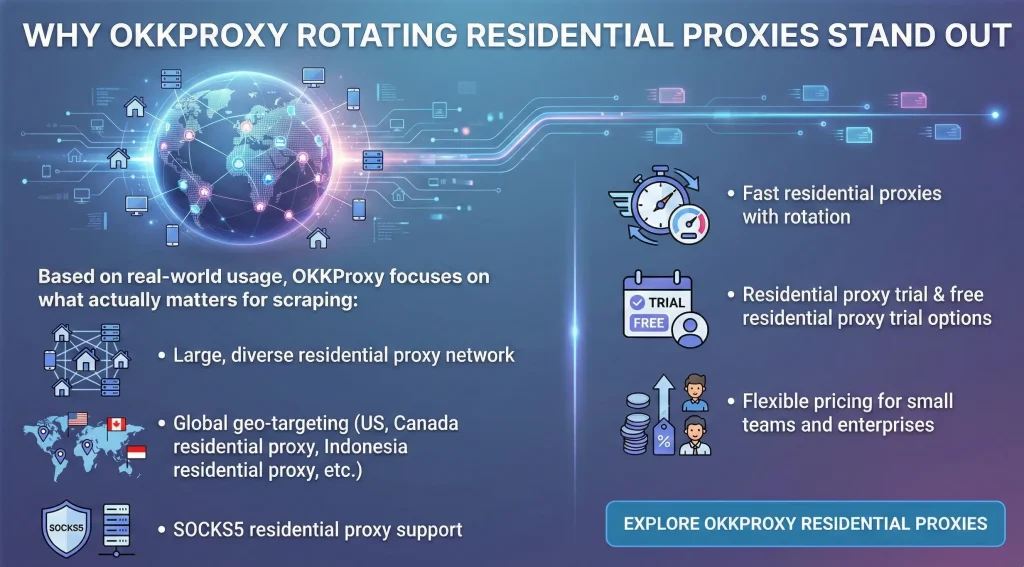
Based on real-world usage, OKKProxy focuses on what actually matters for scraping:
- Large, diverse residential proxy network
- Global geo-targeting (US, Canada residential proxy, Indonesia residential proxy, etc.)
- SOCKS5 residential proxy support
- Fast residential proxies with rotation
- Residential proxy trial & free residential proxy trial options
- Flexible pricing for small teams and enterprises
Whether you need:
- US residential proxy
- SOCKS5 rotating residential proxy
- Affordable rotating residential proxy
- Best residential rotating proxies for scraping
OKKProxy is built for production-grade reliability.
FAQ: Rotating Residential Proxies and Scraping
What is the difference between rotating and non-rotating residential proxies?
Rotating proxies automatically change IPs, while non-rotating (static) proxies keep the same IP.
Are rotating residential proxies legal?
Yes, when used to access publicly available data and in compliance with website terms and local laws.
Can I scrape without getting blocked 100% of the time?
No solution guarantees 100%, but rotating residential proxies dramatically reduces blocks.
Are free rotating residential proxies reliable?
In most cases, no. They lack IP quality, rotation control, and success rate stability.
Do rotating residential proxies support SOCKS5?
High-quality providers like OKKProxy support SOCKS5 rotating residential proxies.
Final Thoughts: Fix the Root Cause, Not the Symptoms
Scraping blocks are not random—they are the result of detectable patterns, poor IP reputation, and outdated proxy strategies.
By switching to rotating residential proxies, implementing smart rotation logic, and using a proven residential proxy service like OKKProxy, you move from “fighting blocks” to building sustainable data pipelines.
If scraping reliability matters to your business, fixing IP strategy is not optional—it’s foundational.
Ready to Stop Getting Blocked? Try OKKProxy Rotating Residential Proxies
If your scraping scripts are still hitting blocks, CAPTCHA, or inconsistent results, it’s time to stop patching symptoms and start fixing the root cause. OKKProxy’s rotating residential proxies (also called dynamic residential proxies) are built specifically for real-world scraping challenges—using a large pool of genuine residential IPs, intelligent rotation, and stable performance across regions.
Try OKKProxy rotating residential proxies today and turn blocked scripts into reliable, production-ready data pipelines.
Watch our video about stopping your scraping scripts from getting blocked below for more information: